

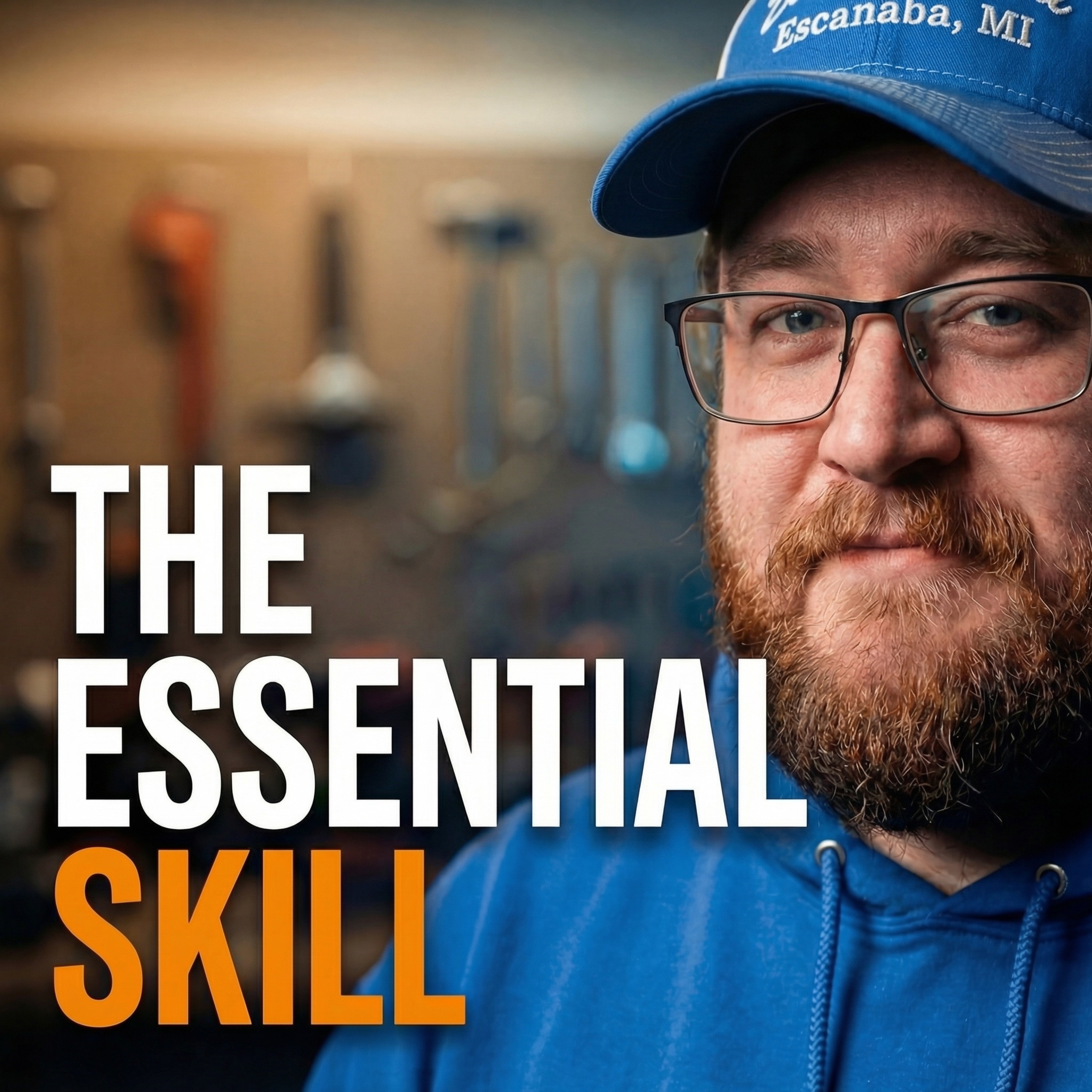
Every truck on the road, every piece of heavy equipment on a job site, every log truck bouncing through the woods at 160,000 pounds — someone has to keep all of it running. That someone is AJ. He started as a diesel tech and worked his way to managing a shop that serves everyone from over-the-road drivers passing through the UP to log truck operators 30 miles deep in the woods. He came in to talk about diesel tech. He ended up making a case that it might be the most underrated career in the trades.
If you have an electrical background, you’re as good as gold in the modern heavy duty industry. Master technicians are rare, and those with these specialized skills can command good paying jobs. This conversation highlights the critical role of these trade jobs as a lifeline when mechanical issues arise, emphasizing how vital skilled mechanics are.
ABOUT AJ
AJ started turning wrenches and worked his way up to managing operations at 10-4 Truck & Trailer Repair in the UP. His shop handles everything from routine maintenance to emergency road calls — tractor trailers, log trucks, heavy equipment, and anything else that runs diesel and needs help. He’s one of those guys who keeps every other trade moving, and most people will never know his name.
🔗 LINKS
Listen wherever your get your podcasts: https://built-in-the-midwest.captivate.fm/listen
Midwest Truck Driving School: midwesttruckdrivingschool.com
North Country Heavy Equipment & Electrical Line School: https://ncheschool.com/
Submit your Questions: https://webforms.pipedrive.com/f/6WfGT9X1zlYC6WvssJqfWxOOkvVa1AjzqgnAIIHOq70WWiNo5czEWXpBMqxVTW7UST
💬 CONNECT
Email: marketing@midwesttruckdrivingschool.com
Facebook: https://www.facebook.com/CDLMidwest
Instagram: https://www.instagram.com/midwesttruckdrivingschool/
TikTok: https://www.tiktok.com/@midwesttruckdrivingskool
Transcript
If you've got some electrical background, you are as good as gold.
Speaker A:Nowadays in the heavy duty industry, the amount of master techs that can do anything out there, it's very, very low.
Speaker A:Guys that can literally do anything.
Speaker A:And right now, you pretty much almost name your price and the shop's probably going to pay it.
Speaker B:Minutes feels like hours, hours feels like days.
Speaker B:And you're just kind of helpless.
Speaker B:Right.
Speaker B:And so you're the lifeline.
Speaker B:If you're thinking about a career in the trades and you want to know what employers actually look for, what the work is really like, and what nobody tells you before you get started, you're in the right place.
Speaker B:Built in the Midwest features conversations that'll help you figure out if this path is for you.
Speaker B:Well, good morning.
Speaker A:Morning.
Speaker B:And I'd like to welcome AJ from 104 truck and trailer onto the show today.
Speaker A:Appreciate it.
Speaker B:Yeah, thanks for being here, AJ And I will tell you, I've gotten the pleasure of being able to work with you quite a bit over the last several years, and it's an absolute joy.
Speaker B:And what this program is all about is about exploring different trades and different careers.
Speaker B:And somebody that is a diesel tech.
Speaker B:Why don't you just kick it off and let's start there?
Speaker B:I want to know more about diesel tech and how you got into this career.
Speaker A:So there's a lot to it.
Speaker A:I mean, a diesel tech can be anywhere from somebody that changes a brake chamber to literally that rebuilds a motor.
Speaker A:You know, there's just, there's so much into it and there's so many different levels of it that, you know, you don't have to, you know, you don't have to jump right in it and get into a motor.
Speaker A:I mean, you could literally airlines, brake chambers, tires, you know, you know, these new trucks got, you know, brake pads versus the kind of semi complicated drum systems.
Speaker A:And there's a lot of.
Speaker B:Yeah, a lot different than just your standard S cam drum that has been around forever.
Speaker A:20 Years ago.
Speaker A:pretty much every truck had a:Speaker B:And that was it.
Speaker A:Yep.
Speaker B:Type:Speaker B:Yeah, that's what you had.
Speaker B:So, you know, talk about that because I will tell you, all my experience on the road was with s cam drum.
Speaker B:Are you seeing a lot more trucks and trailers out there with disc brakes?
Speaker A:Yeah, a ton.
Speaker A:You almost got a. I don't know if you can even get drums anymore.
Speaker A:You probably could, but I'm sure it'd be more of a special order thing.
Speaker A:And don't get me wrong, the disc brakes, they perform so much better.
Speaker A:I mean, they do.
Speaker A:It's crazy.
Speaker A:Yeah, the rotors last pretty much the life of like a regular drum would.
Speaker A:And the pads are about double the shoe.
Speaker A:But they're really easy to change.
Speaker A:You know, the shoes are easy to change.
Speaker A:When you get into the drums or the rotors and calipers, it's a little more interesting, but I'll be darned.
Speaker B:So talk to me about that.
Speaker B:As far as.
Speaker B:Would you say a massive percentage of the truck industry is going to air brake discs and are we going to see a time where S cam drum just doesn't exist anymore at some point?
Speaker A:Yeah, I'm sure of it because the stopping distances are.
Speaker A:Are so much better.
Speaker A:My dad actually has disc brakes on his newest truck and he said it's phenomenal the response and how good they.
Speaker B:Work, really, just almost night and day and that's what they're going to look at when it comes to safety.
Speaker B:And I mean, typically speaking, you have about double the stopping distance as a passenger car.
Speaker B:So if you can shorten that significantly.
Speaker A:And that almost, almost creates a problem because if you've got a truck behind you with drum brakes and you have a panic stop situation, the truck behind you is not going to stop near as fast as you.
Speaker A:So it almost, the two differences almost pose a little bit of a problem,.
Speaker B:But almost makes it makes it more.
Speaker A:Dangerous at that point, in a sense, you know.
Speaker B:Yeah, absolutely.
Speaker B:It's interesting.
Speaker B:I had a buddy that had a BMW and he loved the BMW, but.
Speaker B:But you know what his favorite thing about the BMW was, was its ability to brake.
Speaker B:And he said it braked significantly quicker than any other vehicle and kept it under control.
Speaker B:And so it's one of those things that when you have a emergency type situation where you need to come to a stop like now, it's like your brakes are the most important thing, you know what I mean?
Speaker B:Yeah, it's fun to accelerate quickly, but the brakes.
Speaker B:All right, that is what I want.
Speaker A:The most control of, especially on like a tractor trailer.
Speaker B:Absolutely, absolutely.
Speaker B:So that's great to know and it's really interesting because like I said, all my time on the road, that's all we had was s Cam drum.
Speaker B:So to think in the last, what would you say, 10 years or so?
Speaker A:Probably about that.
Speaker A:Yeah.
Speaker B:Last 10 years there's been this massive.
Speaker A:Shift and I don't know if you can get a, like I said, get a new truck with drum brakes.
Speaker A:I'm sure if you probably order it that way you could, but.
Speaker A:erything I see on say, like a:Speaker A:I don't know if I've seen the drum brakes, you know.
Speaker B:No, it's becoming standard now.
Speaker B:The air brake, disc brakes are kind of the new standard.
Speaker A:Yeah.
Speaker A:We have a:Speaker B:That's all disc brakes as well.
Speaker B:Now, from a maintenance perspective, how did you.
Speaker B:Because that wasn't around 15 years ago.
Speaker B:So how did you learn about all this?
Speaker A:A lot of it is.
Speaker A:It's pretty much set up almost like a car in a sense.
Speaker A:You know, I mean, it's.
Speaker A:But it's a lot heavier duty, you know, technology, obviously, you know, but it's just, you know, it's just learning, you know, and it's kind of crazy to think, but I mean, you watch videos of people that teach things and, you know, but it's absolutely.
Speaker B:Once you have a foundation, then it's about.
Speaker B:You can kind of start to figure stuff out.
Speaker A:And it's basic mechanics, you know, in a sense, you know, you need some specialty tools when you're working on the calipers and stuff, but.
Speaker B:Yeah, absolutely.
Speaker B:You know, something that you touched on there a little bit, which I want to dive a little bit more into is, you know, some diesel techs are like service technicians where they're doing lights and tires and drive shafts and oil changes.
Speaker B:And then there's more maybe heavy duty or in depth.
Speaker B:Talk about kind of those differences.
Speaker A:Yeah.
Speaker A:So.
Speaker A:And you can have two different guys that do the, you know, do the different things, you know, But I mean, the service guys are DOT inspections and doing wheel seals and oil changes.
Speaker B:And that's a busy job too, right?
Speaker B:I mean, there's a lot of stuff like that.
Speaker A:Honestly, that's probably more of the busy type thing.
Speaker A:It is because there's so much basic stuff that goes wrong in a truck.
Speaker A:You know, the.
Speaker A:They don't make them like they used to.
Speaker B:Yeah.
Speaker A:You know, we've had some.
Speaker A:,:Speaker B:Oh, wow.
Speaker A:If you're.
Speaker A:If you've got some electrical background, you are as good as gold nowadays in.
Speaker A:In the.
Speaker A:In the heavy duty industry.
Speaker B:Really?
Speaker B:Yeah, really.
Speaker B:Just because of all the electrical and.
Speaker A:Technology and sensors and.
Speaker A:And crazy, you know.
Speaker B:Yeah, absolutely.
Speaker B:So how does a guy, you know, And I'm thinking about somebody in high school and you know, we do presentations with ISDs and different things.
Speaker B:And I get asked that question once in a while.
Speaker B:All right, how can I become a diesel technician now?
Speaker B:Is there a few different roads?
Speaker B:And what would you recommend?
Speaker A:The first thing is you gotta have some sort of kind of common knowledge of it.
Speaker A:That'd be a really hard thing to teach from scratch if you don't have any sort of mechanical ish background, whether it be, you know, watching dad or grandpa or, you know, because I've seen it come from both ways.
Speaker A:The taught and then the kind of natural.
Speaker A:But yet, you know, going through the motions of the schooling and that.
Speaker A:And.
Speaker A:Yeah, and you definitely, if you got some background in it, really helps.
Speaker B:So, so being able to.
Speaker B:Wanting to tinker and, and say someone was in high school and they're, they're working on their pickup truck and they're working with their dad, changing brakes and oil changes and, and rotate the tires,.
Speaker A:Whatever, you know, and not be afraid of taking something apart and figuring out how to put it back together.
Speaker A:And that's, that's big in this world because, you know, there's, there's a lot, there's a lot to that.
Speaker A:And you're going to be working on stuff that you've never worked on before.
Speaker A:If you're in a industry like we are, to where you're, you know, pretty much anybody is gonna stop by if they got a problem.
Speaker A:You know, when you're on the commercial side of things with like trucking companies and that where they got the same, you know, hundred same trucks and trailers, you know, but it's definitely interesting when.
Speaker B:So that's probably a lot easier because you're dealing with probably the same problems a hundred times.
Speaker B:Yep.
Speaker B:Yeah, but.
Speaker B:Yeah.
Speaker B:Cause I have seen like, you see some of these diesel tech programs that are maybe Cummins spec or CAT specific.
Speaker B:What does that mean?
Speaker A:That's pretty much they're teaching you on their specific motors and drive line, but.
Speaker B:Nobody else's per se.
Speaker A:Nobody else?
Speaker A:Nope.
Speaker A:And they might be teaching you a lot of things that may be beneficial to some other stuff because a lot of the engines are.
Speaker A:They got a lot of the same stuff going on, but they're teaching specific them related things, you know, as far as taking apart, putting back together.
Speaker B:Yeah, absolutely, absolutely.
Speaker B:You know, it's interesting because I can kind of relate this to the CDL side of things a little bit where, you know, some people say, well, I've never, I've never, you know, what's a clutch?
Speaker B:You know, questions like that.
Speaker B:I'm like, have you ever driven a four wheeler or a dirt bike with a stick?
Speaker B:You know what I mean?
Speaker B:A clutch is a clutch, right?
Speaker B:It engages and disengages.
Speaker B:It's like, you know, there was a student here recently that didn't know what the left and right outside mirrors were for.
Speaker B:And so he's like, well, where's the rear view mirror?
Speaker B:And I'm like, there is no rearview mirror in a semi truck.
Speaker B:You know, we got our left and right outside mirrors.
Speaker B:Those are the ones we gotta focus on.
Speaker B:But yeah, just.
Speaker B:And maybe that's a lesson here.
Speaker B:It's just being more inquisitive to what's going on and being willing to take stuff apart, put it back together, kind of try new things.
Speaker B:Right.
Speaker A:And don't be afraid to ask questions.
Speaker B:Yeah, well, exactly, exactly.
Speaker B:You know, and I think that's huge.
Speaker B:So from your perspective, you take someone out of high school, if someone's inquisitive, they're working on their own truck and everything else.
Speaker B:Would you say getting right into a shop and working with maybe some senior techs is a great way to gain that experience?
Speaker A:It is, it is.
Speaker A:As long as you're willing to learn and pay attention.
Speaker A:That's the big thing.
Speaker A:You can learn a lot from a guy that's been doing it for 20, 30 or even more years, you know.
Speaker B:Absolutely.
Speaker A:That's big.
Speaker B:Someone that's been in the trade working on this stuff.
Speaker B:And you know, your trade.
Speaker B:I love your trade.
Speaker B:Cause your trade feeds so many trades.
Speaker B:When you think about it, like, who's behind the scenes making sure that that heavy equipment is.
Speaker B:Is running properly and maintained.
Speaker B:All the trucks, the trailers, all the lineman stuff, right.
Speaker B:The digger derricks, those are diesel techs that are behind the scenes.
Speaker B:You're really the unsung heroes.
Speaker A:Yeah.
Speaker B:What do you think about it?
Speaker A:You try to keep everybody working.
Speaker B:Yeah, you keep everybody moving.
Speaker B:Every log truck.
Speaker B:I see log trucks in and out of your facility there all the time.
Speaker B:And you know, it's one of those things that everyone sees, the log trucks, but they don't know behind the scenes who maintains them, who makes sure that they're up to par.
Speaker A:And there's so many moving parts to those things too.
Speaker A:You know, they got the hydraulics that load.
Speaker A:The drivetrain's like any other truck, but it's like twice as heavy duty.
Speaker A:You know, just massive motors in them and they definitely.
Speaker B:And unfortunately they bounce and they're heavy hauling.
Speaker B:So it seems like they're breaking stuff.
Speaker A:All the time, bouncing in and out of the woods.
Speaker A:They're driving on roads I wouldn't want to drive my pickup down.
Speaker A:And they're doing it with £160,000 of gross.
Speaker A:So there's a lot of.
Speaker B:When it comes to them, you know.
Speaker B:And I give all log truck drivers a lot of credit because it's something.
Speaker B:I've just gone out with some friends before and I'm like, how?
Speaker B:Yeah.
Speaker B:And like you said, they take these fully loaded log trucks and trailers down trails.
Speaker B:I might take a four wheeler down and I'm like, I mean, the massive potholes.
Speaker B:I mean, they're rubbing the pumpkins in the back and I'm like, what the heck?
Speaker B:You know, you got trees slapping the side of the truck, like, well, you know, gotta trim them somehow.
Speaker A:And those log truck drivers, they don't call road service when something breaks.
Speaker A:No, they figure it out themselves.
Speaker A:You know, like these over the road drivers, they'll just pick up a phone, oh, I'm broke down.
Speaker A:Come fix it.
Speaker A:With these logged truck drivers, they'll get out, they'll figure out what's broken.
Speaker A:They'll figure out a way to make it to where they can get it out of the woods, at least.
Speaker B:Exactly.
Speaker A:Log truck drivers are definitely.
Speaker B:So you actually see that.
Speaker B:You see that where your log truck drivers that are stuck 30 miles in the middle of the woods, it's like, no, they gotta figure it out and they gotta clamp stuff together or pinch stuff off or just to be able to get it out of the woods, to get it to a shop.
Speaker B:But they're gonna keep moving.
Speaker A:Yep.
Speaker A:They figure out a way to make it happen.
Speaker A:Yeah, they're truly.
Speaker A:It's crazy that some of the stuff.
Speaker B:They can do and some of those guys are almost, you know, you know, diesel techs, you know, to an extent.
Speaker B:With what.
Speaker B:With what they.
Speaker B:And they're given.
Speaker B:Essentially, they're like, who's that?
Speaker B:MacGruber.
Speaker A:Yep.
Speaker A:MacGyver.
Speaker B:MacGyver.
Speaker B:MacGyVer.
Speaker A:Yeah.
Speaker B:And like chicken wire and duct tape and they're able to make it work and get themselves out of the woods,.
Speaker A:But they'll carry extra hydraulic hoses and fluids, and it's.
Speaker A:It's pretty crazy.
Speaker B:It is, it is.
Speaker B:And what they're able to do right in the middle of the woods there.
Speaker B:But, you know, and that's kind of interesting because, you know, for somebody that's interested in getting into say, say even an owner operator type position or a log truck type position, it's like, you know, they should know that some of that light maintenance, that's going to be your responsibility.
Speaker B:And those smaller companies, you know, and correct me if I'm wrong, aren't going to tolerate you, oh, I got a blown brake chamber, you know what I mean?
Speaker B:You know, would you come on out and fix it?
Speaker B:It's like, no, they're going to expect you to cage it and pinch off that line.
Speaker B:Am I right on that?
Speaker A:Yeah, yeah.
Speaker A:If you're an owner operator for sure you've got to do that kind of stuff yourself.
Speaker A:You know, nowadays with freight rates and fuel prices, you can't afford to take every single repair or breakdown to a shop.
Speaker A:No, you've got to try to do at least the basic stuff yourself.
Speaker B:You got to try.
Speaker B:You got to try.
Speaker B:And you know, even when you're talking about, I'm thinking like pigtails or having to replace a pigtail or replace lights or headlights or, I mean there's, there's, or glad hand seals or even glad hands to an extent.
Speaker B:It's like there's so many, so many stuff.
Speaker B:So maybe you could talk about that on, you know, to save some drivers out there, maybe some money or some companies, you know, what advice would you give them on the maintenance side of things?
Speaker A:You, you should absolutely have just a basic set of airline fittings with you.
Speaker A:Because if you have an airline rub on a frame or anywhere, you can just, you can cut out the bad part, put a union in just to get yourself to somewhere and keep going correctly or you know, and you know, have fluids with you.
Speaker A:We've been called out different times where driver had a small leak and need some coolant, you know, have fluids with you, have basic tools with you.
Speaker B:I think I'm gonna start writing this stuff down.
Speaker B:All right.
Speaker B:This is important stuff.
Speaker A:It really is with you and you know, just kind of have the ability to kind of self help yourself if you end up in a not a crazy situation, you know.
Speaker A:You know, what's also a guy I don't think of is having one of them airlines that connect your glad hands to put air in a tire.
Speaker B:I always carried one with me as well.
Speaker B:Yeah, those are, those are slick.
Speaker A:And you don't see a lot of over the road guys like that anymore.
Speaker A:You know, of course, a lot of the company drivers, you know, they, they don't think they get paid enough to deal with anything like that.
Speaker A:You know, when it comes down to it, you know, it's your time and you know, if you can get yourself off the side of the road or.
Speaker B:Do Somewhere that could be huge.
Speaker A:Time is money to you.
Speaker B:Yeah, absolutely.
Speaker B:Do you want to wait four or five hours for a service truck or can you get yourself going, get some air in it?
Speaker B:And that makes a huge difference.
Speaker B:I remember.
Speaker B:And maybe I wouldn't recommend people doing this, but taking a truck a very long distance with no clutch and starting it in gear.
Speaker B:Because guess what?
Speaker B:It saved the company thousands of dollars to do it back home as opposed to on the road.
Speaker B:But I think more people should have that kind of mindset.
Speaker B:And don't look at it like you're just saving the company money, but look at it like you're saving yourself a lot of time too.
Speaker A:Exactly.
Speaker B:That's important.
Speaker A:Yeah.
Speaker A:Because time is money in this industry.
Speaker A:Because you got a clock on your dash, it's just ticking away and it doesn't care if you're broke down or not.
Speaker B:And you don't get paid if you're sitting.
Speaker B:You know what I mean?
Speaker B:That's.
Speaker B:The trucking industry is pretty much across the board.
Speaker B:You only get paid if those wheels are turning.
Speaker B:So it's in your best favor to keep those wheels turning.
Speaker B:So with that being said, what would you say are the.
Speaker B:And I'm looking at, you know, looking at.
Speaker B:Across the.
Speaker B:Across the country, the top five breakdowns for.
Speaker B:And we'll focus on, you know, tractor trailers and stuff that you see.
Speaker A:Or would you say the main, the main one we deal with is blown brake chambers.
Speaker B:Okay.
Speaker A:That's probably one of the more common ones nowadays.
Speaker B:We see that often too.
Speaker B:Yeah.
Speaker A:Yep.
Speaker A:You know, and that's.
Speaker A:And that's something I will say with the disc brakes.
Speaker A:Their.
Speaker A:Their chambers do last a little longer.
Speaker B:Is it a different.
Speaker B:Is it a different chamber as well?
Speaker A:I guess it's a different style.
Speaker B:Okay.
Speaker A:The same kind of concept but.
Speaker A:But it's a.
Speaker A:It's a different.
Speaker B:Seem to last a little bit longer though.
Speaker A:A lot more expensive, of course.
Speaker B:Oh, of course.
Speaker B:Of course.
Speaker A:You know, and then there's so many emissions related problems nowadays.
Speaker A:It's just absolutely crazy.
Speaker A:You know, anywhere from just sensors being bad to def.
Speaker A:Freezing up because the heater quit or some trucks just not meeting the current.
Speaker A:The right parameters to regen themselves and you need to plug a computer into.
Speaker B:Them and figure derates it down to nothing.
Speaker A:Yeah, yeah.
Speaker A:But it's so computerized nowadays that you know, you can have a truck that just needs the regen and.
Speaker A:But it's in the middle of winter and that exhaust needs to hit a certain temperature.
Speaker B:It's not going to.
Speaker A:No, no.
Speaker A:There's been some situations to where you gotta figure out what's ailing it.
Speaker A:And there's been one that it just, it needed like 30 more degrees of the exhaust temp before it would kick in.
Speaker A:And you know, surprising enough, turning the engine fan gave enough load on the engine to heat up the exhaust just that much more.
Speaker A:And then bam, it snap of a finger, it was like, oh, all right, we're good to go.
Speaker A:But when it's 10 below zero, that exhaust is hanging down in the frigid.
Speaker B:Temperatures and it's not heating up anytime, anytime quick.
Speaker B:Yeah.
Speaker A:Winter is hard on everything.
Speaker B:Yeah.
Speaker A:Especially emission systems.
Speaker B:Wow.
Speaker B:That's, you know, I talked to a lot of companies and a lot of them had mentioned that as well that these emission systems account for like a massive percentage of their, of their, of their, of their breakdowns and of their, of their maintenance.
Speaker B:You know, and I know it drives, it drives drivers crazy as well on the road.
Speaker B:Because when, when you're DE rated down to five miles an hour and talk about why, why they, why do they do that?
Speaker A:They do that so you don't just keep driving it because they'll, they'll keep going.
Speaker A:It's just you're going to damage your, your, your filter system if you drive it plugged or.
Speaker A:But all that derate is, is just to make you pay attention to what's wrong and make you do something about it.
Speaker A:I mean, some of the newer stuff is getting smart enough to, where you can't just clear the code and drive it a little bit more.
Speaker A:It wants to see that you fixed the problem and, and, and you know, probably I'd say five, six years ago, you know, if a guy could just, just clear the codes and that would be enough to get me home.
Speaker A:Well, you really can't do that anymore because these trucks are smart enough to know you didn't fix anything.
Speaker B:Well, yeah, so.
Speaker B:And then it would take, it would take a little while for that code to show back up, but at least it would, it would keep, keep you going.
Speaker A:But it might buy you a couple hundred more miles.
Speaker B:Yeah.
Speaker B:Yeah.
Speaker B:Do you think they're getting better with these systems?
Speaker A:I do, I do.
Speaker A:You know, especially on, we work a lot on the Mac Volvo and they have definitely gotten a little better.
Speaker A:oing this stuff back in what,:Speaker B:Yeah, it's been a long time.
Speaker B:It's only 18 years later we're starting to figure this stuff out.
Speaker B:Well, you know, thank God some of these Trucks get, you know, 1.2, 1.3, 1.4 million miles on an engine and a transmission.
Speaker B:So, you know, it allows.
Speaker B:There's other things that they've really perfected.
Speaker B:I'm thinking like the whatever DD15, like the Detroit Series 60.
Speaker B:And some of those motors just, you couldn't kill them.
Speaker A:If you let them warm up, let them cool down and change oil like you're supposed to, you never had anything to worry about.
Speaker B:No, no.
Speaker B:It's amazing.
Speaker B:And one thing I've always wanted to ask the diesel tech this question.
Speaker B:All right, why is it a gasoline engine?
Speaker B:You're going to get 2 to 300,000 miles maximum, typically speaking.
Speaker B:Right.
Speaker B:And there's a lot of trucks on the road right now with over a million miles, same engine, same transmission, hauling the heaviest stuff out there.
Speaker B:How's that possible?
Speaker A:Everything, number one, everything's turning slower.
Speaker A:an, you're just cooking along:Speaker A:But they build them, they build them to last too.
Speaker A:You know, if they built car motors to last that long, man, nobody would ever want to, you know, buy cars.
Speaker A:But I will say that a lot of the newer gas motors are, you know, 100,000 miles is nothing anymore.
Speaker B:No.
Speaker B:So you have seen them kind of increase that number.
Speaker A:And with the amount of emissions issues nowadays, I've seen a lot of medium duty applications, don't even bother with diesels anymore in some of the school bus type situations.
Speaker A:So the gas motors are, I don't want to say making a comeback, but I mean, they're a lot simpler, you.
Speaker B:Know, a lot simpler.
Speaker B:And those from a maintenance perspective, are they easier to maintenance?
Speaker B:You said they don't have emissions on the gas stuff.
Speaker A:Not that I've seen.
Speaker A:I mean, they've always had catalytic converters on, but they don't have def and all that.
Speaker A:You know, oil changes are cheaper, but I mean, but you're not going to see a million miles out of one.
Speaker A:You're not going to see fuel mileage out of a gas motor by a long shot, you know, so the diesels are way more efficient.
Speaker A:And if you're in a long term standpoint, they're the only way to go.
Speaker B:They're more efficient, you can get that higher mileage.
Speaker B:Right.
Speaker B:But I mean, but clearly the gasolines are getting better.
Speaker B:But it seems like you look at your, I'm thinking like, I mean, airplanes to an extent, but your boats, your ships, your big Cargo ships, all your tractor trailers, your heavy equipment.
Speaker B:There's gotta be something to diesel, right?
Speaker B:I mean, because almost everything out there, everything big like that is diesel.
Speaker A:And it's, it's just efficiency.
Speaker A:Efficiency and longevity.
Speaker A:That's what it's all about.
Speaker B:Yeah, absolutely.
Speaker B:So, no, it's really, really interesting and something talking about the heavy equipment side things too.
Speaker B:Those are correct.
Speaker B:If I'm wrong.
Speaker B:But whether it's your logging, your processors and your forwarders or your backhoes or your mine trucks, all those are diesel too, right?
Speaker A:Everything like that.
Speaker A:Yep.
Speaker B:Everything like that.
Speaker B:Right.
Speaker B:So who maintenances all that stuff on the heavy equipment side?
Speaker A:It's a diesel tech.
Speaker B:It's a diesel tech.
Speaker A:Yep.
Speaker A:Yeah, it's, you know, whether it's, whether it's a small little generator up to the big logging trucks and heavy equipment, I mean, it's.
Speaker A:They're still, they're still diesel powered and it's crazy to think that, you know, they've all got fuel injectors and turbochargers and it's just.
Speaker A:They start amplifying the size up bigger and bigger.
Speaker B:They just make everything bigger and bigger and bigger and bigger.
Speaker B:So it can handle so much, so much more.
Speaker B:Well, you just see what some of these, I think like the, the huff at the, at the mill.
Speaker A:Oh my goodness.
Speaker B:I mean, like, it'll pick up.
Speaker B:It'll pick up a small house or a big house.
Speaker B:I mean, it's.
Speaker A:I've watched them pick up a fully loaded semi trailer that sunk in the mud.
Speaker A:They literally just go over there.
Speaker A:They.
Speaker A:They put a strap around it.
Speaker A:No, it just right up like it's nothing.
Speaker B:Like it's nothing.
Speaker A:Got £40,000 of paper in the trailer.
Speaker B:And it's like no problem.
Speaker A:They don't even know it's there.
Speaker A:Which.
Speaker B:There's not many tow companies around that could pull that out of the ditch and not struggle.
Speaker B:Struggle heavily.
Speaker B:Almost every big tow out like that I've seen, they always have to empty the trailer because it's just too much weight to pull out and a lot of it.
Speaker A:If they unload the trailer, they're doing less damage to the trailer too.
Speaker B:Sure.
Speaker A:It's all in damage control in that business, you know, because you don't, you don't ever want to create more damage.
Speaker B:Create more damage.
Speaker A:You already are, you know, and turns.
Speaker B:Come at some point if you're rolled over.
Speaker B:I mean,.
Speaker A:Unless you're in the mid, unless you're in the middle of 94 in Chicago, they're going to try to probably Be careful, you know.
Speaker B:Yeah, they're going to be careful.
Speaker B:They're.
Speaker B:They're going to want to salvage as much as they can.
Speaker B:And, and the load perhaps as well.
Speaker A:Exactly.
Speaker A:We, last week we had a situation where a place called us that they had a trailer that had end up going in the ditch from the snowstorm.
Speaker A:And their main concern was the contents of the trailer.
Speaker A:They needed to get it inside a warm shop so the contents didn't freeze and get the trailer legal to haul down the road.
Speaker A:And that was their main concern because the contents could be three times the value of the truck sometimes in the trailer.
Speaker B:So what that, did they tell you what they were hauling?
Speaker A:It was non hazardous.
Speaker A:That's all I cared about.
Speaker B:Non hazardous.
Speaker B:Okay.
Speaker B:But something expensive in that trailer.
Speaker B:But it could not freeze.
Speaker B:It could not freeze.
Speaker B:So it had to go into a shop somewhere, otherwise.
Speaker B:So.
Speaker B:Yeah, that's an interesting point as well.
Speaker B:You see some of these really high dollar loads.
Speaker B:There's a student that I communicate with once in a while and he's hauling out of like Arizona, but he's hauling lithium, not lithium ion.
Speaker B:It's like cobalt ion, I believe, Tesla batteries.
Speaker B:But these are like millions and millions of dollar loads.
Speaker B:So at that point they don't care about the truck and the trailer.
Speaker B:Like if something were to happen, they care about that, that cargo.
Speaker B:Right.
Speaker B:You know, and, and there's, there's all these different things.
Speaker B:Like they gotta scan the back doors and they got a metal seal and a lock on the back.
Speaker B:I mean you can imagine how, what kind of security is involved with, with stuff like that.
Speaker B:But so did that load ended up being fine and everything?
Speaker A:Yep.
Speaker A:Yeah, yeah, we put it inside the shop.
Speaker A:It sat overnight.
Speaker B:We just help everybody did a couple.
Speaker A:Things to the trailer to make it to where it was dot legal and they went and delivered it and.
Speaker A:And life went on.
Speaker B:Yeah, no, nothing, nothing wrong with that.
Speaker B:You just help everybody, you know that.
Speaker B:So we try well and we certainly appreciate it.
Speaker A:And you gotta have the guys behind you to put in the work.
Speaker A:When it comes to people calling and having problems.
Speaker A:If you don't have a guy in the shop that can do it or has the time to do, makes it tough, you know, so.
Speaker A:And thankfully we've got four guys that are full time and you can get a lot of stuff done with four guys.
Speaker B:Absolutely, absolutely.
Speaker B:I think having a great crew and a great team, but what you do helps not just the local community.
Speaker B:And that's something, you know, I wouldn't mind having you, having you share Is like, you know, you don't work on just the local community trucks.
Speaker B:I see trucks from all over in your shop.
Speaker B:Talk about that.
Speaker B:I mean, some of these guys are from California.
Speaker A:You know, that's what we try to do is we try to save a few hours throughout the day for the guys that are passing through and having problems.
Speaker B:And because that's going to be.
Speaker B:That's a part of trucking.
Speaker B:Right?
Speaker B:Those things are going to happen.
Speaker A:That's.
Speaker A:That was an avenue in this area that we, we knew there was nobody that.
Speaker A:That could help.
Speaker A:So.
Speaker A:And it's unfortunate because there are times we don't have the time.
Speaker A:And it's like they say, well, where would you recommend?
Speaker A:And it's like, unfortunately everybody around here, you know, is booked up days and weeks in advance, which is great for them.
Speaker A:You know, it's nice to be busy.
Speaker B:But there's a massive void there too.
Speaker A:Correct?
Speaker A:Yeah.
Speaker A:With pretty much if we can't do it, they've gotta send somebody up from like the green Bay area or they gotta get ahold of Gene's towing and say, hey, I need to get brought here or there, you know.
Speaker A:Cause unfortunately around here there's just, you know, there's just not much around here.
Speaker B:We're kind of up in the middle of nowhere.
Speaker B:Yeah, we are.
Speaker B:We are in the middle of nowhere pretty much, you know, not quite to the point where we're hearing the banjos.
Speaker B:All right.
Speaker B:But maybe if you go more towards Stonington Neymar.
Speaker A:Yeah.
Speaker B:Give my friends a shout out over in that neck of the woods.
Speaker A:But it's like I said, it's nice to have a crew of good guys that when the phone rings, you can help as many people as you can, you know, and it's obviously, it's a for profit business.
Speaker A:So, I mean, you say you're helping, but at the same time, you know, it's still a business, but.
Speaker B:But it's a win win.
Speaker B:And at the end of the day, that's what this world is.
Speaker B:It's about a win, win.
Speaker B:You know what I mean?
Speaker B:Cause some of these guys, I've been broken down in the middle of the country before and it's the absolute worst feeling in the world.
Speaker B:And when I'm dealing with the dispatcher and the maintenance manager and they're like, well, let me look on ntts breakdown and they're doing this and I'm like.
Speaker B:And you're just sitting there, I'll tell you, it feels like minutes, feels like hours, hours feels like days.
Speaker B:And you're just kind of helpless.
Speaker B:Right.
Speaker B:And so you're the lifeline.
Speaker A:Yeah.
Speaker A:And you got to prioritize too.
Speaker A:If you're real, real busy and it's something that, you know, really doesn't require a service call and the driver's just kind of being, you know, picky.
Speaker A:If you're super busy, you can kind of just let those ones go.
Speaker A:But then there's.
Speaker A:There's some to where, you know, your phone might ring at 8 or 9 o' clock at night and it's, hey, my driver's truck died.
Speaker A:You know, he's in Marquette.
Speaker A:It's, you know, zero degrees outside.
Speaker A:You know, I got to figure out something because he's getting cold and.
Speaker A:And those type of things, you gotta.
Speaker A:You just gotta figure it out, you know.
Speaker A:And of course, those are when it's a blizzard out and you know, of.
Speaker B:Course, Murphy's Law, you know, so that's when you gotta.
Speaker B:Something bad's going on.
Speaker B:Well, something even worse is gonna happen,.
Speaker A:You know, so you gotta prioritize.
Speaker A:And those are the ones where if you gotta, you know, if you got a life on that other end that, you know, you gotta try to figure things out and, you know, it's in prioritizing and we try to do that the best we can.
Speaker B:Yeah, absolutely.
Speaker B:Well.
Speaker B:Well, it's just.
Speaker B:I really appreciate what you do, you know, not just for the school, but just for the community in general and have somebody to go to that does such a great job.
Speaker B:It takes pride in their work.
Speaker B:And I just.
Speaker B:It's one of those things that you really are kind of the backbone of all these industries.
Speaker B:And you are the unsung heroes, you know, that you really are.
Speaker B:And everyone sees the trucks going down the road.
Speaker B:They see.
Speaker B:They see the big huffs at the mill and they see the log trucks hauling 160,000 pounds of wood.
Speaker B:They see homes being built.
Speaker B:But who's maintaining all those trucks and trailers and heavy equipment?
Speaker B:There's a diesel tech behind the scenes that's making that happen.
Speaker B:So.
Speaker B:Any other thoughts or words that you'd like to share with aspiring diesel techs out there?
Speaker A:Yeah, so pretty much, if you enjoy mechanics, you will always have a job somewhere.
Speaker A:It doesn't necessarily have to be rebuilding motors and stuff.
Speaker A:It's just if you have the passion and the desire to do a job and do it right, you're always gonna have a job.
Speaker A:And you pretty much.
Speaker A:The sky's the limit as far as what you can learn and do.
Speaker A:The amount of master techs that can do Anything out there, it's very, very low.
Speaker A:Guys that can literally do anything.
Speaker A:And right now you pretty much almost name your price and a shop's probably gonna pay it because, you know, you're a very, very low percentage of techs out there.
Speaker A:And even like the start of the entry level type, the main thing you gotta do is just take your time, don't be afraid to ask questions and learn and pay attention because if you start running up the ranks, I mean, the sky's the limit in that industry.
Speaker B:Absolutely.
Speaker B:So one other kind of follow up question to that.
Speaker B:Would you say I've been in the trucking industry for going on 20 years and I learn new stuff every day and would you say that's the same in your trade as well?
Speaker A:Yes.
Speaker A:When it comes to, especially on our side where you see any type of different vehicle there is, you know, when it comes to, you know, heavy equipment to tractor trailers, to, you know, bucket trucks and I mean it's you, you can definitely learn something new every day, you know, because there's, you know, there's multiple different types.
Speaker A:Even if it is an over the road truck.
Speaker A:Well, there's four, five, six different kinds.
Speaker A:And you know, they could have the same truck but different motors.
Speaker A:And I mean it's definitely.
Speaker A:You never know what's going to walk in the door or call you and you know.
Speaker B:Yeah, absolutely.
Speaker B:And I think that's important that you know what, you never take one course and you're done learning or work under some guy for six months and you're done learning.
Speaker B:It's like, no, this is a continual process and, and I really believe in my life, the more I've learned about anything, the more I've realized how little I know.
Speaker B:Like, I almost like get scared of learning more because the more I learn, the more like my knowledge goes down, the more I learn.
Speaker B:Because you realize how little you really know.
Speaker B:But it's one of those things is being able to continue to learn, continue to grow, continue to progress.
Speaker B:But I really appreciate your kind of insight on all this, A.J.
Speaker B:You know, I appreciate you being on the show.
Speaker B:I'll give you the last word, my friend.
Speaker A:And unfortunately they don't make things easy to work on nowadays.
Speaker A:You're going to struggle sometimes and you know, things are unfortunately made cheaper nowadays.
Speaker A:So you're never not going to have something to do, you know.
Speaker B:Absolutely.
Speaker B:They're not building stuff to last anymore.
Speaker B:No.
Speaker B:You know, this plant, I got a couple friends that are engineers and they straight up told me the planned obsolescence is A thing engineers, if they knew they can make that part say one inch and it would last a million miles.
Speaker B:No, they'll make it a quarter inch to last 100,000 miles right after the warranty ends.
Speaker A:And they'll make it out of plastic.
Speaker B:And they'll make it out of plastic knowing that the hot, cold, hot, cold, it's no different.
Speaker B:You leave a, you leave this water bottle in the ditch for a year.
Speaker B:Now don't do that.
Speaker A:All right?
Speaker B:I can pick up garbage every year.
Speaker B:Leave a ditch for a year.
Speaker B:Well, it'll start weather tracking, cracking and it'll eventually bust into a million pieces.
Speaker B:Right.
Speaker B:And then you have microplastics all over the place.
Speaker B:But the same thing on all this plastic parts on your vehicle.
Speaker A:Yeah, it's crazy what they don't make out of metal anymore, but I know they do it for weight savings and cost, but it just boils down to that.
Speaker A:That plastic does not last forever in the heat of the coolant and the heat of the oil.
Speaker A:You know, it's not a good thing, but I mean it's good job security for us.
Speaker B:It's good job security.
Speaker B:So you know.
Speaker B:Well, and at the end of the day, as long as there's people like yourself that are willing to kind of get down and dirty.
Speaker B:All right.
Speaker B:I would say a lot of these trades are dirty jobs.
Speaker B:You can say if I was micro up here talking, you know, and it's.
Speaker A:Not, they're not, it's not always fun, you're not always going to have good days.
Speaker A:But when it gets down to it, it's a very, it's a very, you know, it's a job that is very required and.
Speaker B:Absolutely.
Speaker A:And I've seen more in the last probably five years that there's.
Speaker A:Honestly, there's a real need for it more than there's ever been.
Speaker B:Yeah, absolutely.
Speaker B:There's a real need out there and I think it's great to put out there that this is a viable career option for people that are thinking about it, you know what I mean?
Speaker B:And look at you going from a full time diesel tech to now manager and managing a location.
Speaker B:And so like the trucking industry, there's different facets that you could get into or maybe you like to.
Speaker B:And I think you see that quite often with diesel techs where somebody just likes to do heavy equipment or someone likes to do knuckle boom cranes or you know, I know some out in Bark river like to do log trucks.
Speaker B:That's all, that's what they do.
Speaker B:And so you can kind of maybe find your niche there too.
Speaker A:Yeah, Yep.
Speaker A:Yeah, exactly.
Speaker A:You know, and I have guys too, that like to work on this, but they can work on anything.
Speaker A:You know, you can, you can, you can like this.
Speaker A:But, you know, if you're, you know, if you've got an open mind and, and some want to work.
Speaker B:Yeah, absolutely.
Speaker A:It's the sky is the limit.
Speaker B:That and the YouTube University.
Speaker B:I know I do my fair share on there.
Speaker A:Yeah, that's a legitimate thing.
Speaker B:It is.
Speaker B:But that's also that willingness to learn.
Speaker B:Right.
Speaker A:You can watch a five minute video and it may save you an hour taking something apart.
Speaker B:Oh, my God.
Speaker B:Even like the home projects in my house, my wife's always got something new for me.
Speaker B:Paint this wall.
Speaker B:Let's redo this trim.
Speaker B:I'm like, I, I don't know how to, how to make the special cuts with trim, but YouTube does.
Speaker A:Right.
Speaker A:And then the other thing too is, is you got to put in the time.
Speaker A:You know, it's huge.
Speaker A:You got it.
Speaker A:You got to be the type of person that you gotta, you gotta show up on time because that, that piece of equipment that's sitting in your bay, that needs to be worked on, you know, it.
Speaker A:There's somebody waiting to operate that, and they may be sitting at home waiting for you to get done with it, you know, but you got to put in the time and you got to be willing to, you know, you know, if it's going to take an extra 15 minutes to finish at 5pm, you got to put in that extra 15 minutes, you know, because a lot of this equipment, you know, may work around the clock too, you know, and the difference between it rolling out the door at 5 o' clock and going to work, you know, it can put in a whole 12 hours before you even get back to work.
Speaker A:So it's very important to, to put in the time.
Speaker B:Exactly, exactly.
Speaker B:And I think that's like a lot of the trades this right now is like, you know, you get paid for results, right?
Speaker B:You know, you don't get paid just to, you know, tighten some bolts or whatever, you know, diagnosing.
Speaker B:No, you get paid for results.
Speaker B:Like, you know, this piece of equipment is broken and I want it fixed.
Speaker B:Well, guess what?
Speaker B:You're working on it until you can fix it, you know, and figure out what's going on with it.
Speaker B:That's, that's where that value is for those results.
Speaker B:So.
Speaker B:Well, I'm not gonna take up any more of your time, A.J.
Speaker B:Because I know you are busier.
Speaker B:One of the busiest guys I know, to say the least.
Speaker B:So I really appreciate you being on the podcast today.
Speaker B:And thanks.
Speaker A:And I appreciate you.
Speaker A:Thanks for having me.
Speaker A:And I appreciate all your guys business.
Speaker A:You keep us nice and busy.
Speaker B:Well, we appreciate you.
Speaker B:All right.
Speaker B:It's a win, win.
Speaker B:So thanks again.
Speaker B:Thanks again for being here,.
Speaker A:RA.