
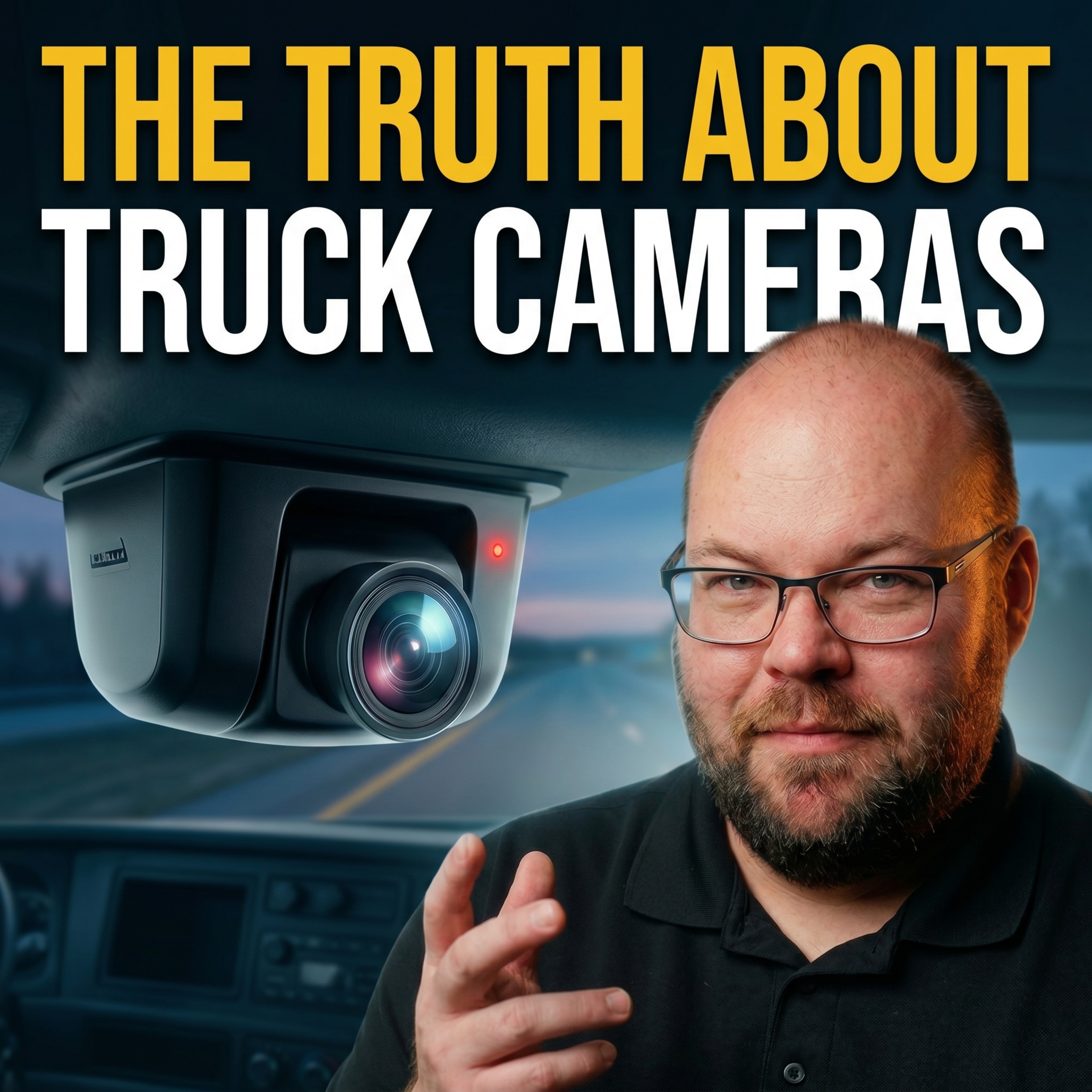
Josh Rouse came up through trucking, stepped away for a stretch, and got pulled back in by a buddy with an opening in operations. Two years on the board later, he moved into human resources and safety — and now handles the hiring, the safety tech, and the IT that ties it all together. A.M. Express is a locally owned, Escanaba-based carrier running vans, tankers, flatbeds, lowboys, and reefers across the lower 48, and it’s one of the companies that comes into the school to recruit.
Takeaways:
- The use of technology in trucking, such as inward and outward facing cameras, enhances safety and accountability for drivers.
- Having a clear long-term goal in the trucking industry can help prevent burnout and ensure career satisfaction.
- Training programs can effectively turn new drivers into top performers, emphasizing the importance of learning on the job.
- Cameras in trucks may seem intrusive, but they can protect drivers from unfair blame and improve their skills over time.
- Opportunities for growth in the trucking industry are abundant, with various specializations available for drivers to explore, such as flatbed and tanker.
- The trucking industry is a viable alternative to traditional college routes, offering potential earnings with minimal student debt.
🔗 LINKS
Check out AM Express: https://amexpressinc.com/
Listen wherever your get your podcasts: https://built-in-the-midwest.captivate.fm/listen
Midwest Truck Driving School: midwesttruckdrivingschool.com
North Country Heavy Equipment & Electrical Line School: https://ncheschool.com/
Submit your Questions: https://webforms.pipedrive.com/f/6WfGT9X1zlYC6WvssJqfWxOOkvVa1AjzqgnAIIHOq70WWiNo5czEWXpBMqxVTW7UST
💬 CONNECT
Email: marketing@midwesttruckdrivingschool.com
Facebook: https://www.facebook.com/CDLMidwest
Instagram: https://www.instagram.com/midwesttruckdrivingschool/
Transcript
There is a camera on you, it's watching you.
Speaker A:It's going to tattle on you when you're maybe not doing right, but you're going to get better.
Speaker A:And B, if there is an issue and you truly didn't do something, you know you're doing the right things, it's going to get you off the hook.
Speaker B:I purposely get people to their breaking point, right.
Speaker B:Not because I don't like it, but because I know that's how you grow.
Speaker A:Drivers who have told me, hey, this is the, I never thought I'd make this kind of money in my lifetime.
Speaker B:What other skill set or month long program can you go from start to finish and get in making 50 grand a year?
Speaker B:I don't know if you're thinking about a career in the trades and you want to know what employers actually look for, what the work is really like, and what nobody tells you before you get started, you're in the right place.
Speaker B:Built in the Midwest features conversations that'll help you figure out if this path is for you.
Speaker B:Welcome, Josh, to Built in the Midwest podcast.
Speaker B:Really exciting having you here today.
Speaker B:Thanks for being on the show.
Speaker A:Thanks for having me.
Speaker A:I appreciate it.
Speaker B:Yeah, absolutely.
Speaker B:Well, well, let's go and dive right in.
Speaker B:Tell me about your role at AM Express.
Speaker A:Well, about two and a half years ago got a call from a buddy of mine who I worked with in trucking previously at AM Express and I was out of the trucking world for a little bit.
Speaker A:And he said, hey, man, I got an opportunity over here.
Speaker A:We're looking for someone in operations.
Speaker A:You interested in coming back?
Speaker A:And I was like, him and Han, you know, and I was like, well, love the job, you know, let's go talk to somebody.
Speaker A:I went in five minutes there, I knew it was a good spot for me to be and spent two and a half years or two years in the operations department.
Speaker A:And then last July I got the, got the call to go to Human resources and safety, which is a little out of my element.
Speaker B:You got pulled.
Speaker B:You got pulled over there.
Speaker A:Yes.
Speaker A:No volunteers, you know, and it's something where I love the operations, love the, you know, getting loads and building relationships with your crew and your drivers, but really love the human resources aspect too in the safety part and still building those relationships.
Speaker A:It's been a phenomenal transition.
Speaker A:I'll scare you a little bit.
Speaker A:You get into a new role and you're like, oh, you know, I haven't really been into this, but absolutely.
Speaker A:That.
Speaker A:It just is naturally.
Speaker A:It naturally worked.
Speaker B:Yeah, you know, it's interesting because I.
Speaker B:So I used to dispatch there for a while and did some HR and safety as well.
Speaker B:And, and you know, different roles like that in a trucking company.
Speaker B:I don't think people realize it, but they're so different.
Speaker B:It's almost not even imaginable.
Speaker B:Did you know what you were diving into?
Speaker A:Be honest.
Speaker A:Not really.
Speaker A:It was, it was, I can only.
Speaker B:Imagine, like, because I've seen, I've dabbled, right.
Speaker B:And I'm like, oh man.
Speaker B:Like it's, it's, it's night and day.
Speaker A:It literally went from one day dispatching to the next week.
Speaker A:Having a conversation about an opportunity at this role and I was like shaking in my boots.
Speaker A:But as I am, I'm just going to plow forward and go, all right, here's an opportunity.
Speaker A:You don't let those opportunities slip away.
Speaker A:And I think it's been a phenomenal transition.
Speaker A:I mean, very scary going into a department where you don't have a ton of background necessarily, but a great support system that also helps in who's around you and that's what really means.
Speaker B:Absolutely.
Speaker B:And you've been in trucking for a long time too, so that's huge.
Speaker B:And you really have like not just one role but a couple roles.
Speaker B:I mean HR safety Manager, you know, safety, especially today's day and age, that's a full time job in itself.
Speaker A:It is and it's not safety and it's under me as well.
Speaker A:So we have the IT department and I'm sure we'll touch on safety and IT are just hand in hand nowadays.
Speaker A:I mean how much technology are in these trucks and how much the driver is just built around the safety part in the internal camera and something.
Speaker A:I didn't know a whole lot about going into it, but I've now I've dug into the, I mean deep dive into that stuff and you realize the industry is all based on technology and it's just, it's growing, you know.
Speaker B:Absolutely.
Speaker B:So, and actually that's, that's something I, you know, for a lot of people out there, they don't, they don't know exactly the latest and greatest of different safety things that are being incorporated into, into trucking and trucks and trailers and everything else.
Speaker B:What are some of the biggest things that you're seeing right now and some of the things that AM is doing to be able to be on the kind of the leading edge of this tech?
Speaker A:Yeah, yeah.
Speaker A:So.
Speaker A:Well, it's a lot and it's really, it's coming a long way even from when, when I first got in, it was the ELD was the big, you know, the mandate came right in back.
Speaker A:Like round 16, 17 of that we'd be coming the mandate.
Speaker A:And now it's like it's standard to have inward, outward facing cameras now.
Speaker A:But not only top of that, it's the AI built into that.
Speaker A:And that's something I didn't even really know until I got into it and just got.
Speaker A:I just was down for a conference in Orlando and safety conference.
Speaker A:And that's really what the whole essentially is about.
Speaker A:It's entirely safety technology.
Speaker A:The AI that's built into our.
Speaker A:To our cameras are they literally coach the drivers actively and that makes a huge difference, you know, and the drivers are getting so good and so aware of their actions on the fly.
Speaker A:There's no more.
Speaker A:It's like instant feedback just from everything.
Speaker A:From literally when they're yawning, it'll pick it up and it'll tell them to pay attention or wake up.
Speaker A:Pretty much, yeah.
Speaker B:No, a little yawner, yeah.
Speaker B:Say they reach for their phone, eyes.
Speaker A:Off the road, anything.
Speaker A:Well, it'll catch phones for sure.
Speaker A:It'll even catch.
Speaker A:Caught a popcorn bag the other day that looked like a phone that someone was eating and popcorn.
Speaker B:Put that popcorn bag now.
Speaker A:Pretty much, yeah.
Speaker A:Like, oh, you can have a snack, maybe you're okay.
Speaker A:But no, it's.
Speaker A:It's the advanced technology that is really making the road safer.
Speaker A:And it's, it's huge.
Speaker A:It's huge for all these companies.
Speaker A:It's amazing when you go and you only hear about.
Speaker A:I think it was around 30% of the companies were actually both inward and outward facing, maybe a few percentage off one way or the other.
Speaker A:But it's not everyone.
Speaker A:And it kind of blows my mind because of how beneficial it is for us and the driver.
Speaker B:No, absolutely.
Speaker B:Well, I appreciate you sharing that because that's something that maybe they maybe haven't thought about or haven't realized all the benefits of it.
Speaker B:And that's other things that I've talked to previous people about where they get scared.
Speaker B:Oh, there's a camera always watching me and Big Brother.
Speaker B:And the fact there's cameras watching you all the time.
Speaker B:I mean, you know, you got traffic cameras all the time.
Speaker B:There's not a restaurant you go into if you go out to eat once in a while, there's a camera watching.
Speaker B:There's not a restaurant out there that doesn't have a camera.
Speaker B:Cameras are a part of life.
Speaker B:And not to mention, you know, I look at it like there was this story I heard just somewhat recently a handful of months back, but a driver had gotten cut off and somebody slammed on their brakes.
Speaker B:Right.
Speaker B:He rear ended her.
Speaker B:And because he had that camera and it showed that exact happening, he was exonerated.
Speaker B:No ticket, no nothing.
Speaker B:Company wasn't involved.
Speaker B:You know.
Speaker B:Have you had things maybe like that in your own experience?
Speaker A:Absolutely.
Speaker A:Not only accidents multiple last year that we had in actually a span of about a week.
Speaker A:All not our fault.
Speaker A:Cameras involved in every which one submitted and removed from our record because other people were careless.
Speaker A:Our drivers obviously in the right.
Speaker A:They were either hit or you know, it was all we were hit.
Speaker A:But not only that, if a driver is pulled over, maybe being accused of doing something they don't and is really as soon as they find out we have an inward facing camera, a lot of time the tune will change and they're going to really, if they got a ticket, they're going to either give them something much lesser just we've had full dismissals down to no points.
Speaker A:It's again, I preach to these drivers when they come in.
Speaker A:Hey, yep, there is a camera on you.
Speaker A:It's watching you.
Speaker A:It's going to tattle on you when you're maybe not doing sure right.
Speaker A:But you're going to get better.
Speaker A:You're going to get better.
Speaker A:And B, if there is an issue and you truly didn't do something, you know, you're, you're doing the right things, it's going to, it's going to get you off the hook and we've had it happen.
Speaker A:Absolutely.
Speaker B:I'll be darn.
Speaker B:It's actually going to help you.
Speaker B:It's going to, it's going to help you.
Speaker B:It's going to be there.
Speaker B:Hey, if you're breaking the rules, this goes for anybody, guess what, it's going to catch you.
Speaker B:You're going to be, there's going to be some corrective action.
Speaker B:But hey, if you're doing it right and you get punished for it by something else, guess what?
Speaker B:We're going to have your back and this is how we're going to have that.
Speaker B:I absolutely love that.
Speaker B:And I think a lot of people don't realize that that is going on.
Speaker B:And even what you told me, what we were talking about the other day where yeah, like a yawn, it'll pick up a yawn and then the actively coaching like hey, you're yawning.
Speaker B:Are you getting tired?
Speaker B:I know, I know.
Speaker B:With my, my little kids, you know, when they start yawning or rubbing Their eyes.
Speaker B:It's like someone's getting tired.
Speaker B:But it's those little things that are, that even adults need that like, oh yeah, I am getting tired.
Speaker B:Right?
Speaker B:Yeah.
Speaker A:And let me take it one step further on the yawning.
Speaker A:It's not just one yawn.
Speaker A:The system's so smart where it realizes it has to be like three within five minutes.
Speaker A:So yeah, you can yawn once.
Speaker A:It's a natural human reaction.
Speaker A:Right.
Speaker A:Maybe you're just, you know, brain.
Speaker B:But it knows more oxygen knows.
Speaker B:No, you hit that turkey.
Speaker B:Yeah, it's like, no.
Speaker A:Yeah, but so it gives them a chance to go ahead and have a.
Speaker A:It's not constant, you know what I mean?
Speaker A:But it's built in for, it's looking for habits and patterns and that's really the key.
Speaker A:And it's made our, it's made our safety scores go down in every, every category.
Speaker A:Yes, we have, we haven't had any, we haven't shown any negative effects.
Speaker A:Only positive.
Speaker B:Only positive.
Speaker B:Wow.
Speaker B:No, that's, that's amazing.
Speaker B:And, and especially with, you know, what we've seen the last, the last few years in the trucking industry and, and you know, this, this freight shortage that we've had and I've talked to a lot of trucking companies kind of about, about the freight shortage that we've had and it's like, man, you can't afford to have any issues because there's already enough problems in trucking.
Speaker B:Don't add more problems on.
Speaker B:Speaking of that, have you seen how is the freight market right now, the driver market right now?
Speaker B:How are you guys doing that way?
Speaker A:I feel like it's trending up from, from the reports I get back from the ops team and our operations manager, things are starting to trend back up and I think a lot of that is the ripple effect of what's going on in the political climate one way or the other.
Speaker A:You've seen the, you know, the fake CDL schools are getting, you know, slowly.
Speaker B:Absolutely.
Speaker B:The English language proficiency.
Speaker B:Right.
Speaker B:There's a lot of people that can't speak English that getting in accidents.
Speaker B:I mean and these have been federal laws forever, but they just weren't being enforced.
Speaker B:And so yeah, you're seeing a lot of that and even the cargo theft.
Speaker B:It's like the truck industry finally has kind of like a big brother that's going to help take care of them a little bit more.
Speaker B:And you know, I was just looking at transport topics and it said a 16 or 17 month high for spot rates and different things.
Speaker B:So it Seems like trucking's coming back, you know, I mean I feel like, you know, everyone in the industry has been beat up for a few years, but it seems like everything's coming back to.
Speaker B:To where, to where we all want it, you know, that's, that's for sure.
Speaker B:Speaking of like drivers and different things and one thing, you know, first of all I want to say thank you for, for hiring the school's new students.
Speaker B:All right.
Speaker B:It means a lot.
Speaker B:It means a lot.
Speaker B:It's one thing that there's a handful of bigger companies that still won't hire right out of schools because of the risk and stuff.
Speaker B:And so if you wouldn't mind speaking to that.
Speaker B:Cause you guys have a phenomenal training program.
Speaker B:You got great trainers.
Speaker B:How do you take someone right outta school that's still very green and get em to where they could get their own truck potentially?
Speaker A:Yeah, absolutely.
Speaker A:And pro.
Speaker A:This is my favorite part of the job honestly is taking someone, including lots of students out of, out of your guys school and turning them into top performers.
Speaker A:I brought a list and I'm going to talk to some a class here in a little while here.
Speaker A:And one of the big things I'm going to talk about is how I've got about 7 of your students or former students that are in the top 12 mile getters already from last year.
Speaker A:Within a year they are getting massive amount of miles and it's not, wow, it's nothing to do with anything, no favoritism, it's straight up.
Speaker A:These guys are willing to work and go to work and, and you took the words right our mouth.
Speaker A:Great trainers and a great program.
Speaker A:It's, it's, it, you know, shout out to those guys and girl and girls out there that are doing that for us.
Speaker A:I mean they're out on the road for six weeks with someone, it's uncomfortable, you're bunked up, it's obviously paid both and you know, it's all paid but it's still, it's an uncomfortable but sure, absolutely.
Speaker A:What makes, what makes it comfortable is you're learning on the fly.
Speaker A:I mean it's, you know, you're learning all the situations.
Speaker A:It's, we know when they come out of the school they can go down the road.
Speaker A:It's all the other little things.
Speaker A:It's the shippers, the receivers, the time it takes, the issues, the traffic, all this other stuff.
Speaker A:And we put them in a truck and by the time they come out we want them almost bored with that training and ready to go and confidence is huge.
Speaker A:I mean, I sit down with every single trainee when they're done and right in my office and I say, hey, where do we miss anything?
Speaker A:What can we do better?
Speaker A:Anything you need.
Speaker A:And if it's more training they need, cool.
Speaker A:If it's not and they have any concerns, you know, we're going to go over it.
Speaker A:And we've seen such a phenomenal turnout.
Speaker A:I mean just some of the, in great people and great stories.
Speaker A:I mean, you got, you know, drivers who have told me, hey, this is the, I've never thought I'd make this kind of money in my lifetime.
Speaker A:I mean just the opportunity that we, we allot them is a phenomenal feeling.
Speaker B:Huge.
Speaker B:It's huge.
Speaker B:And it makes you feel good.
Speaker B:And I've always said that for a long time the, the intrinsic reward with what I get to do, you know, I get to take people that, that were living in a box, right?
Speaker B:Or didn't have, didn't have a permanent home or you know, that maybe, maybe was in jail for a couple of years over something, you know, that they did when they were younger.
Speaker B:I mean, who knows?
Speaker B:But I get to really take people and elevate them and give them great, great futures and companies like yours enable that to happen.
Speaker B:And so like I said, I really appreciate what you guys do.
Speaker B:You've given so many of the school students great opportunities and like I, we're, we're a part of that puzzle and you guys finish them off and have a great finishing program.
Speaker B:And, and now I still talk to some that have been there numerous years, still doing good, still trucking, loving the opportunity that, that you gave them.
Speaker A:I, I have, I have people that came out of yours and I reciprocate that back to you guys.
Speaker A:Without you, without you guys being there and doing the work you're doing, we wouldn't have this great pool of drivers.
Speaker B:To help and, and it truly is a win win.
Speaker A:It is.
Speaker A:And it's a win win for them too.
Speaker A:I have trainees coming up to me now that have come out of your program that want to start training.
Speaker A:They just love the experience so much.
Speaker A:They've made a phenomenal, you know, rapport with their trainer and they network.
Speaker A:And again, we have great people that work for our company.
Speaker A:I mean, phenomenal people.
Speaker A:All of our drivers are just there.
Speaker A:I can't say one's not extremely polite, helpful, courteous to the point where I got drivers coming up, just ideas, trying to network with each other, building up the bringing everyone up.
Speaker A:I know it is huge and a lot of These guys came out of your program and it was just, hey, they see, it's like almost like they saw the, you know, writing on the wall.
Speaker A:It's like, hey, this.
Speaker A:And then, you know, I try to listen, you know, actively listen to them.
Speaker A:And they have all the, they have the ideas, they teach me as much as I feel like I teach them.
Speaker B:A lot of times you get a great team like that and then you're building each other up, you know, And I, and you know me, I'm a pusher, right?
Speaker B:I push people and I purposely get people to their breaking point, right?
Speaker B:Not because I don't like it, but because I know that's how you grow.
Speaker B:If I can get you uncomfortable, if I can get you out of your box, I'm going to push you.
Speaker B:I'm going to push you.
Speaker B:I'm going to push you like a drill sergeant, right?
Speaker B:It's not the teachers that are the nicest that you learn the most from.
Speaker B:It's the teachers that push you, that challenge you, that, you know, help you get over those hurdles.
Speaker B:Those are the teachers I know.
Speaker B:I mean, I hated some of my teachers, but looking back, I'm like, man, the ones that were the hardest, that's probably where I grew the most, honestly.
Speaker B:And so I tried, I tried to be nice and friendly and everything, but I also, I also try to push as well and get the, get, get these students to get the most out of themselves.
Speaker B:I think is important.
Speaker A:Get them uncomfortable.
Speaker A:Yeah, no, uncomfortable ability is an important thing.
Speaker A:And it's, people stay comfortable for too long, they're going to have maybe develop some bad habits or not realize what they can actually do.
Speaker B:Absolutely phenomenal.
Speaker B:Yeah.
Speaker B:What are some good, good kind of advice that you can give new students that are getting to the truck industry or maybe just random individuals out there thinking about the truck industry.
Speaker B:As far as, you know, what it takes to be successful in the truck industry.
Speaker A:I would say the main thing is to have a goal.
Speaker A:I always ask, and I, I'll come in and ask this, what's your long term plan?
Speaker A:What are you going to do?
Speaker A:What do you see yourself in 2 years, 3 years, 5 years?
Speaker A:A lot of people just come in and jump in a truck and don't really have a plan and they maybe burn themselves out or kind of just get, you know, stagnant or whatever.
Speaker A:I said, what's your plan?
Speaker A:What are you thinking?
Speaker A:What are you going to just, you know, are you just going to drive, you know, van?
Speaker A:You got a long term plan?
Speaker A:Do you want to you know, work yourself to a different area.
Speaker A:I always recommend having a plan and having some kind of path.
Speaker A:You, you know, you're spending a lot of effort, time to get trained, a lot of money to get in this industry.
Speaker A:And it's absolutely, it's, you know, we've come to a part where this is skilled labor.
Speaker A:Now just again, this was touched at this conference I went to.
Speaker A:Phenomenal.
Speaker A:Just say, you know, that we're at a part where trucking is skilled labor.
Speaker A:So you have a skill out there.
Speaker A:What are you going to do with that skill?
Speaker A:And I, and I have that conversation, I feel like with everyone and I would tell everyone, you're looking into getting a cdl, you're looking into driving, have a plan, have a good plan in place.
Speaker A:It might not be something you want to put a timetable on, but have a goal to work towards.
Speaker A:And I think you'll see yourself, you know, have something to work for and better yourself and you won't get burnt out.
Speaker A:It's not an easy job and I'm sure you've touched that.
Speaker A:You touched on that a lot.
Speaker A:I've heard you say it.
Speaker A:It's a tough job, it's a tough world, but it's rewarding.
Speaker A:You can jump in and make a good living right away.
Speaker A:There's very little roles I feel like outside of the trades you can do that right away where there's just absolutely.
Speaker A:You control your destiny.
Speaker B:What other skill set or month long program can you go from start to finish and get in making 50 grand a year?
Speaker B:I, I don't know, I can't think of 60.
Speaker B:Yeah, well, exactly, you know, yeah, you know, you start here, but there's so much room for growth and, and you know, and maybe that's something you could talk about, is that growth, because I've seen guys at your company go from dry van to flatbed to tanker.
Speaker B:You know, talk about that.
Speaker B:There's, there's, there's a lot of different opportunities within the truck industry.
Speaker A:Yeah.
Speaker A:And that's one of the beautiful things that we have is we have very diverse roles.
Speaker A:We have a local fleet, we have a van fleet, we have a flatbed, we have a tanker.
Speaker A:We even do a little bit of like refrigerated control, temps, some heavy haul.
Speaker A:So very diverse owner operators.
Speaker A:And that's the thing.
Speaker A:And that's why I like to have that conversation.
Speaker A:Hey, what do you.
Speaker A:Look, we have all these opportunities.
Speaker A:You want to work towards something.
Speaker A:Yeah, I do have a couple of guys right now that have just done this.
Speaker A:They're getting into the flatbed end of things and they're moving from van to flatbed.
Speaker A:Just.
Speaker A:Just had three drivers do two plus or one plus two more do that.
Speaker A:Now I have a trainee that we took on last year.
Speaker A:He's actually going to be training for tanker here soon.
Speaker A:And it's non hazmat, but maybe the long run, he's going to look into some hazmat down the road.
Speaker A:I understand that might not be us, but at least we put a path on this guy.
Speaker A:And he.
Speaker A:And you know what I mean.
Speaker B:Well, and he's hauling, you know, non hazmat tanker.
Speaker A:Yeah.
Speaker B:And those are.
Speaker B:And correct from.
Speaker B:But I've.
Speaker B:I heard those are non baffled tankers too.
Speaker B:Right.
Speaker B:Unbaffled tankers.
Speaker B:All right, which, which is harder than any fuel or LPG tanker because all those have baffles, you know, when it comes to hazmat tankers have baffles, you know, so that's a, that's a whole nother boulder ride.
Speaker B:But I imagine there's a little bit.
Speaker B:It's a, A little bit more of a challenge.
Speaker B:They get paid a little bit more and there's more, there's more opportunity there.
Speaker A:Yep, Absolutely.
Speaker A:Yep.
Speaker A:The pay is completely.
Speaker A:Yeah, it's not completely different, but it's.
Speaker A:Yeah, there's a.
Speaker A:There's more rewarding for that.
Speaker A:It's more training, more responsibility.
Speaker A:You're obviously hauling a liquid and Absolutely.
Speaker B:You know, I love the fact you're talking about the goals, too.
Speaker B:And I think, I think that's so important.
Speaker B:That's one of the first questions I asked all the students start a class and getting their name, where they're from and what do you want to do?
Speaker B:What do you want to do with your cdl?
Speaker B:What's your plans?
Speaker B:And you know, when you hear the guy say, I don't know, we'll see.
Speaker B:I'm like, no, got to give me something.
Speaker B:Like, you got to start thinking about that.
Speaker B:Right?
Speaker B:It's like that senior in high school, hey, what do you want to do when you graduate?
Speaker B:I don't know.
Speaker B:Well, you know what?
Speaker B:If you don't know where you're going to go, guess what?
Speaker B:Any path will take you there.
Speaker B:Right?
Speaker B:You got to have some focus.
Speaker B:What's that saying?
Speaker B:Where focus goes, energy flows.
Speaker B:And so, you know, thinking about.
Speaker B:And I tell the students, you know, think about what you want to do.
Speaker B:All right.
Speaker B:Do you want to get into, you know, dry van or hazmat or local or regional or over the road or, you know, do you want to See the country.
Speaker B:You want to get paid to see the country.
Speaker B:I mean, you know, and that's where, that's where OTR there is nothing like it.
Speaker B:All right, you want to go, you know, through the Grand Canyon or through the Badlands and the Dakotas or the Rocky Mountains, whatever.
Speaker B:Guess what?
Speaker B:You can get paid to do that.
Speaker B:Right.
Speaker B:And you can see this gorgeous country of the United States.
Speaker B:And I've been able to see a lot of it because of that.
Speaker B:But what other, you know, I guess challenges do you see new drivers getting into the street?
Speaker B:What challenge do you see them having to overcome maybe that, that other people can kind of expect?
Speaker A:Well, I would say the biggest one is, is the, is the hours they're putting in.
Speaker A:If they're not used to maybe working, you know, 60, 70 hours a week, I would say that that's a, that's a pretty big challenge for them to get to get them and they get used to it, don't get me wrong.
Speaker A:But I would say that's a, I always say try to start them off a little bit.
Speaker A:You know, we always try to start.
Speaker B:Them off slow, lean them into it a little bit.
Speaker A:Yeah, you know, those, those 10, 11 hour driving days, right off the bat, stretching them out.
Speaker B:It's tough.
Speaker B:Absolutely.
Speaker A:Really one of the biggest things and this has came from this, the conference.
Speaker A:I just got back from his parking too.
Speaker A:I mean if you're getting into any sort of driving that's not, you're not home nightly, you're going to run into some parking issues and it's, it's being addressed somewhat, you know, state level, maybe even federal level.
Speaker A:They've talked about opening some stuff and that, and that's great and good and there's just some really hard places to try to park.
Speaker A:And then, you know, working on your, trying to figure out your logs, you know, and split, you know, trying to do split sleeper sometimes because there might be some issues that pop up.
Speaker A:Whether it's a delay in loading, you know, receiving all that stuff is just, it can be overwhelming.
Speaker A:And that's why I always like, every driver's got my cell phone, every driver's got their dispatcher cell phone.
Speaker A:It's like call, reach out and call, don't.
Speaker A:I. I try to always try to follow up as much as I can with even a text to call.
Speaker A:Hey, how's it going?
Speaker A:Anything we could do for you?
Speaker A:How we doing?
Speaker A:Just to be in a support system Because I think the big thing is getting overwhelmed pretty quickly can happen.
Speaker B:Absolutely.
Speaker A:And, and we have a Great team at AT AM Express.
Speaker A:From everyone from the guy who's been there for five days to the people who've been there for 25 years there.
Speaker B:That can help if you need the help.
Speaker A:It's a team.
Speaker B:Yeah, absolutely.
Speaker B:So you're not on, you're not stuck on an island or anything, anything like that.
Speaker B:You know, that was something.
Speaker B:I remember when I was trucking, having my trainer's number was the best thing in the world.
Speaker B:I get to a specific consignee or, or a shipper or whatever, and I'd be like, man, how do you get into here?
Speaker B:Or like, you know, it's in downtown Chicago.
Speaker B:I'm like, I don't want to hit a low bridge.
Speaker B:What's the best way to get it?
Speaker B:Oh, yeah, take this, take this, take that.
Speaker B:Don't go to the, to the entrance on Google, because the entrance on Google is the, is the, what, employee entrance back to the trucking entrance.
Speaker B:Always look for shipping and receiving.
Speaker B:Right.
Speaker B:You know, but you kind of learn those things.
Speaker B:But yeah, getting overwhelmed is definitely a part of it.
Speaker B:And, and you know, one thing, like kind of what we talked about earlier is I tell people that it's going to be uncomfortable, it's going to be difficult, it's going to be hard.
Speaker B:That's okay.
Speaker B:That's a part of learning, right?
Speaker B:And it takes, it takes a lot to, to learn about this trade.
Speaker B:And I always love to tell people after they graduate, get their cdl.
Speaker B:I was like, well, your learning has just begun.
Speaker B:Like, what do I just, you know, drove all over the place.
Speaker B:I was like, well, that's the first step, right?
Speaker B:You know what I mean?
Speaker B:The first step, you know, we'll take it here and get you that cdl.
Speaker B:But there's so much more once you hop on the road to learn and to, to do.
Speaker B:Once you, once you get out there, which is, which is huge, one of the other things that I want to talk about is, you know, education.
Speaker B:And right now, right now, and for the last 30 years, there's been such a huge push for college and university and college, university.
Speaker B:And now we have the highest student debt that we ever had.
Speaker B:We had all this.
Speaker B:And, you know, I think it's important for people to realize that the trades are a great viable option with minimal student debt.
Speaker B:What are your thoughts on that?
Speaker A:Yeah, I even, you know, I don't have a college educate.
Speaker A:I've worked my way up and I would say for anybody, I wish there were more opportunities like you're offering people.
Speaker A:When I was younger There wasn't a lot.
Speaker A:There was no recruiter coming to see us and give us these opportunities.
Speaker A:And I feel like, you know, the majority of people I know are in some sort of trades area and they're making a good living without, again, student debt.
Speaker A:And again, that.
Speaker A:That's necessary for a lot of roles.
Speaker B:Sure, absolutely.
Speaker A:But if.
Speaker A:If you're looking to get into this, any sort of trades industry, it's very rewarding as far as, I mean, infrastructure.
Speaker A:We're growing as.
Speaker A:As in every which way.
Speaker A:I mean, look at the roads.
Speaker A:It's.
Speaker A:There's always something to be done out there, and they need those people.
Speaker A:And it's.
Speaker A:I mean, you can speak on how.
Speaker A:How quickly you can get into this and be successful at something.
Speaker B:Absolutely.
Speaker A:Even if you're not, if you don't have maybe have the confidence to do it, talk to somebody, I would recommend it and f. Go, you know, go out and.
Speaker A:And seek.
Speaker A:There's so much information out there.
Speaker A:I mean, at this point, you can, you know, YouTube, YouTube website, you know, Midwest shout out.
Speaker A:They, you know, you guys, a lot of stuff.
Speaker B:Even this right here, that's what this is about.
Speaker B:It's about educating people about these different trades, about these different industries.
Speaker B:But that's also.
Speaker B:With all the information out there, it's almost a negative in a weird way, because it's almost too much and it's information overload.
Speaker B:And I think you can have that confirmation bias with whatever opinion you have.
Speaker B:Someone else is gonna agree with you.
Speaker B:But like you said.
Speaker B:Yeah, reaching out to.
Speaker B:Reaching out to a professional in the industry is reaching out to somebody that is in the industry and does it.
Speaker B:You know, and the other thing about the truck industry, which I really love, is there's over 200 different divisions of the truck industry.
Speaker B:You know, I mean, there's.
Speaker B:There's local and regional, and over the road, there's dry van and reefer and Conestoga and hauling heavy equipment.
Speaker B:I mean, they'll tanker.
Speaker B:The list just goes on and on and on.
Speaker B:And it's one of those things that there's kind of different fits for different people.
Speaker B:So do you see like a better fit for somebody that's maybe OTR versus maybe local or regional or even like dry van or flatbed or tanker?
Speaker B:Is there a better fit that you see for those different divisions?
Speaker A:Yeah, sometimes, like individually, for sure.
Speaker A:When I.
Speaker A:And again, really, the favorite.
Speaker A:My favorite part of the job is just the interaction with human beings and people.
Speaker A:I mean, as soon as I start talking to someone and I kind of Start, you know, back and forth.
Speaker A:It's like, I can see this guy's potential is, you know, to the.
Speaker A:Whatever they want to do.
Speaker A:So I absolutely, you know, if someone comes into this and they might be like, come.
Speaker A:Just come out of the school and they're very green, and they just don't know.
Speaker A:It's like, well, hey, check this out.
Speaker A:Look at.
Speaker A:Look at this.
Speaker A:We, you know, it comes to flatbed.
Speaker A:It's hard.
Speaker A:It's hard to recruit flatbedders right now, but the pay is there.
Speaker A:You know what I mean?
Speaker A:It's.
Speaker A:It's physical.
Speaker A:It's physical.
Speaker A:And we live in, I think, the climate we live in, you know, But I think it's.
Speaker A:It's more responsibility.
Speaker A:It's a little more training, you know, and we do have.
Speaker A:We do have flatbed training.
Speaker A:We train for flatbed, too.
Speaker A:And it's.
Speaker A:There's.
Speaker A:There's guys that come in, and I get a lot of military guys that come in, former military, current military.
Speaker A:That's what they want to do, and I love that.
Speaker A:I mean, I.
Speaker A:And they want the challenge.
Speaker A:It's a little more challenging, a little more work.
Speaker A:But they jump right in it, and I see it right away.
Speaker A:Even when I start talking.
Speaker A:Yeah.
Speaker A:Kind of.
Speaker B:They talk about it, hey, you know what?
Speaker A:A flat.
Speaker A:Give me that.
Speaker B:Give me that hard load.
Speaker B:All right.
Speaker B:Yeah, I want to work out and get paid to work out.
Speaker A:It's a.
Speaker A:It's a prideful division.
Speaker A:Honestly, those guys are some of the most prideful.
Speaker A:This is what I'm doing.
Speaker A:I don't even want to look at a van.
Speaker A:And, you know, every now and then, they might have to.
Speaker A:But, like, they're very.
Speaker B:They're very swinging doors.
Speaker A:Yeah, that's what they say.
Speaker A:Yeah, they call it.
Speaker A:They're not doing that.
Speaker A:And they were.
Speaker A:They're throwing straps and they're tarpon, and they're.
Speaker A:And, hey, I love it.
Speaker A:I challenge them.
Speaker A:Hey, what can we do?
Speaker A:What can we get done this week?
Speaker A:Everything's good.
Speaker A:We're safe.
Speaker A:Right.
Speaker A:We're, you know, the way we're talking, you know, making sure they have the right, you know, accessories, everything.
Speaker A:But absolutely.
Speaker A:It's a.
Speaker A:It's.
Speaker A:It's something we've been trying to grow on as our flatbed division.
Speaker A:We have.
Speaker B:Yeah.
Speaker A:Where we live.
Speaker B:No sense.
Speaker B:It makes sense.
Speaker B:And there's a lot of.
Speaker B:A lot of lumber being hauled and a lot of steel coils coming out of Canada.
Speaker B:I mean, there's just.
Speaker B:There's so much flatbed.
Speaker B:So much flatbed.
Speaker B:But No, I talked to a flatbed driver recently with you guys and that's what he said.
Speaker B:He's like, I get paid to work out.
Speaker B:He's like, you know, when you're hustling 100, 150 pound tarps over top and throwing straps and he's.
Speaker B:And he's like, you know, it requires a little bit more mental acuity because you got to know, all right, how many straps do we have?
Speaker B:Where are we going to put those straps?
Speaker B:Where's the load going to be?
Speaker B:We got to strap.
Speaker B:Not just strap it down, but tarp it down depending on the load.
Speaker B:And you probably know more about that than I do.
Speaker B:But I've been, I've been learning.
Speaker B:But it's interesting.
Speaker A:You got to doubt that, you know, that budgies.
Speaker B:Yeah, yeah.
Speaker B:You know, I'm starting to figure it out.
Speaker B:You know, you see enough loads, protectors,.
Speaker A:They have to think about all that stuff.
Speaker A:What is my reload?
Speaker A:Is it brick?
Speaker A:Is it something completely different?
Speaker A:Because then you're looking at a bunch of new set of tools and making sure they got all the right stuff.
Speaker B:And absolutely, absolutely onto endorsements.
Speaker B:So this is something that I get asked from students all the time.
Speaker B:They say, what endorsements do I need?
Speaker B:All right, what endorsements do you guys require?
Speaker A:We don't require any other than obviously class A cdl, but I always recommend getting a tanker endorsement for sure.
Speaker A:As many as you feel comfortable with.
Speaker A:I don't think that hurts anybody.
Speaker A:No, I would say tanker just because.
Speaker A:You just never know.
Speaker A:I mean, because even if you're going to be a van driver, there's loads that are tanker endorsed.
Speaker A:Van loads are out there and a lot of drivers don't know that.
Speaker A:As soon as they come into my.
Speaker A:A lot of times the recruiters will, during the class, they'll come in and do a visit with me and I'll sit down and say, hey, what do you.
Speaker A:You know, I'm gonna go get my seat.
Speaker A:Hey, are you getting your tanker?
Speaker B:Yep, yep.
Speaker A:I plan a.
Speaker A:Great.
Speaker A:Awesome.
Speaker A:If they're not, you say, hey, well if you're going to haul van, there's some, you know, haul the totes of liquid.
Speaker A:There could be other things where it require tanker.
Speaker A:Just a good thing to have and then they can have that in their back pocket if they need it.
Speaker A:So I always recommend whatever they feel comfortable with getting.
Speaker B:That's good to know.
Speaker B:So the advice out there, get that tanker endorsement.
Speaker B:Listen, because even dry van, it's not a tanker per se, but it's qualified as a Tanker, when you're hauling Those big, like 250 gallon totes of liquid and stuff, it's going to qualify.
Speaker B:So that tanker endorsement.
Speaker B:And what about hazmat?
Speaker B:No Hazmat for you guys.
Speaker A:Nothing for us.
Speaker B:Not right now anyway.
Speaker B:But who knows, you know?
Speaker A:Yeah, who knows?
Speaker B:And then doubles, triples.
Speaker B:I don't think anything there either, but.
Speaker A:But I see a lot of people ask about them and I say, go get them.
Speaker A:Why not?
Speaker A:It doesn't hurt.
Speaker B:It doesn't hurt?
Speaker B:No, it doesn't hurt.
Speaker B:What about FAST cards and TWIC cards?
Speaker A:Twic, the one.
Speaker A:Anybody who's in tank.
Speaker A:TWIC is going to be pretty much required at some point because the twig cards.
Speaker B:Okay, so.
Speaker B:And just to tell people what the.
Speaker B:What the TWIC card is a transportation worker identification card.
Speaker B:If you're going in and out of any ports or anything, you need that.
Speaker B:That twit card.
Speaker A:Well, even a lot of the places that are load and tanker require a twig hard.
Speaker A:So yeah, they'll.
Speaker A:They'll want those.
Speaker A:It'll just eliminate some of the problems if there's any, you know, escorts needed and some of that stuff.
Speaker A:So.
Speaker A:Yeah, I believe all of our tanker.
Speaker A:Tanker drivers are Twix.
Speaker B:Require that.
Speaker B:Require that trick card.
Speaker B:Okay, see, I didn't.
Speaker B:I didn't know that, so.
Speaker B:And I know there are some different things, and I know that time.
Speaker B:Was that a background check and making sure you didn't leave your fingerprints in a crime scene or anything, which I watched Dexter, so I'm pretty good about that.
Speaker A:Yeah, to get it, it's pretty easy.
Speaker A:You just fill out a form and go down and get your fingerprinted and the paperwork comes back good, you're good to go.
Speaker A:It's not a whole lot of.
Speaker A:Yeah, it's just 100 and like 100 and some dollars.
Speaker A:Okay.
Speaker A:It's nothing.
Speaker B:And then.
Speaker B:So you got.
Speaker B:And then you have that clearance to be able to be able to do that and that background check.
Speaker B:What about the fast car, like going in out of Canada or Mexico?
Speaker B:Do you.
Speaker B:Do you guys do anything?
Speaker A:We don't know.
Speaker B:Nothing.
Speaker A:Nothing.
Speaker A:Nothing over the border now.
Speaker A:Just.
Speaker A:I don't know.
Speaker B:It's too much of a pain in the butt.
Speaker A:Yeah, that could be one way to say it for sure.
Speaker B:That's what I've heard from a handful of cars.
Speaker B:Like, no, we don't even deal with that.
Speaker B:And even, you know, going through, going down and around Canada, it's not worth going across through Windsor or anything, you know.
Speaker A:Yeah, that's what they.
Speaker A:No one asked to deliver there.
Speaker A:They just want to cut across Canada.
Speaker B:Exactly.
Speaker B:There's nothing that.
Speaker B:That goes there.
Speaker B:Right.
Speaker B:They just want to cut across and save a couple hours.
Speaker A:Yeah, that's.
Speaker A:That's.
Speaker A:That's usually the plan.
Speaker A:That's usually what the driver's argument is like, hey, we should get their Canada, you know, so we can cut, like.
Speaker B:I get it.
Speaker A:I think they're paying us to go around, though, so no worries.
Speaker B:No, exactly.
Speaker B:It's like, hey, you know what it is what it is.
Speaker B:Couple extra miles.
Speaker B:But I've heard some horror stories of guys being stuck at the border for, you know, you know, 8, 9, 10 hours if they didn't have the fast card because they.
Speaker B:They got to run the background checks and do all this.
Speaker B:And, you know, you had a DUI from 20 years ago, now you can't go into Canada.
Speaker B:And so it's a.
Speaker B:It can be a real, real pain in the butt.
Speaker B:Well, I'll tell you what, Josh, I really enjoyed our con.
Speaker B:All right, Once again, Josh, with.
Speaker B:With AM Express out of Escanaba, a company that comes into the school on a regular basis to recruit students.
Speaker B:And once again, we really, really appreciate that, but I want to be respectful of your time.
Speaker B:Is there anything else that you want to talk about?
Speaker A:No, other than I appreciate what you guys do for us.
Speaker A:And.
Speaker A:And, you know, it's been a phenomenal, in my words, of partnership between us.
Speaker A:Not.
Speaker A:Not a real one, but a respect partnership.
Speaker A:And it's.
Speaker A:It's, again, the trainees we get are some of our.
Speaker A:Starting to become our top performers.
Speaker A:And now we're starting to look at trainees starting to want to become trainers down the road.
Speaker A:You know, we have some requirements from our insurance that take some time, and they know that, but that's okay.
Speaker A:We had that conversation.
Speaker A:I just had that conversation last week with the driver.
Speaker A:Hey, what do I got to do here?
Speaker A:Well, here's the guidelines.
Speaker A:Let's sit down and talk about it here in a little while and give these.
Speaker A:Give these guys and girls we have an opportunity.
Speaker B:So it's something to look forward to.
Speaker B:Like, hey, maybe I can, you know, I'm going from being green to being a trainer, and it's something I can look forward to doing later on.
Speaker A:It's all about opportunity.
Speaker A:Yeah, absolutely.
Speaker A:That's what we love to do, is give people opportunities.
Speaker A:Again, just some of that rewarding stuff, especially since I've transitioned over to hear some of our drivers talk about the different things they've got to do.
Speaker A:Whether it's like travel and get paid a lot of times, that's it.
Speaker A:I mean, I just had a driver in my office this morning pumped about going to Arizona.
Speaker A:It's like, oh, all right, he's leaving tomorrow night when he usually he's excited.
Speaker B:About it, but especially with the winter this year up here, you know, anywhere but the up in the winter time, it just finally starting to get some nice weather.
Speaker B:But, but yeah, no, but no, great, great company, great trainers, great team.
Speaker B:And if anyone wants any information, we'll put the link down to AM Express down down there as well.
Speaker B:But and they have some great opportunities and some great divisions.
Speaker B:So, so we'll put that information down there.
Speaker B:But thank you again for your time, Josh, and we're going to look forward to seeing you at the school here soon to recruit.