
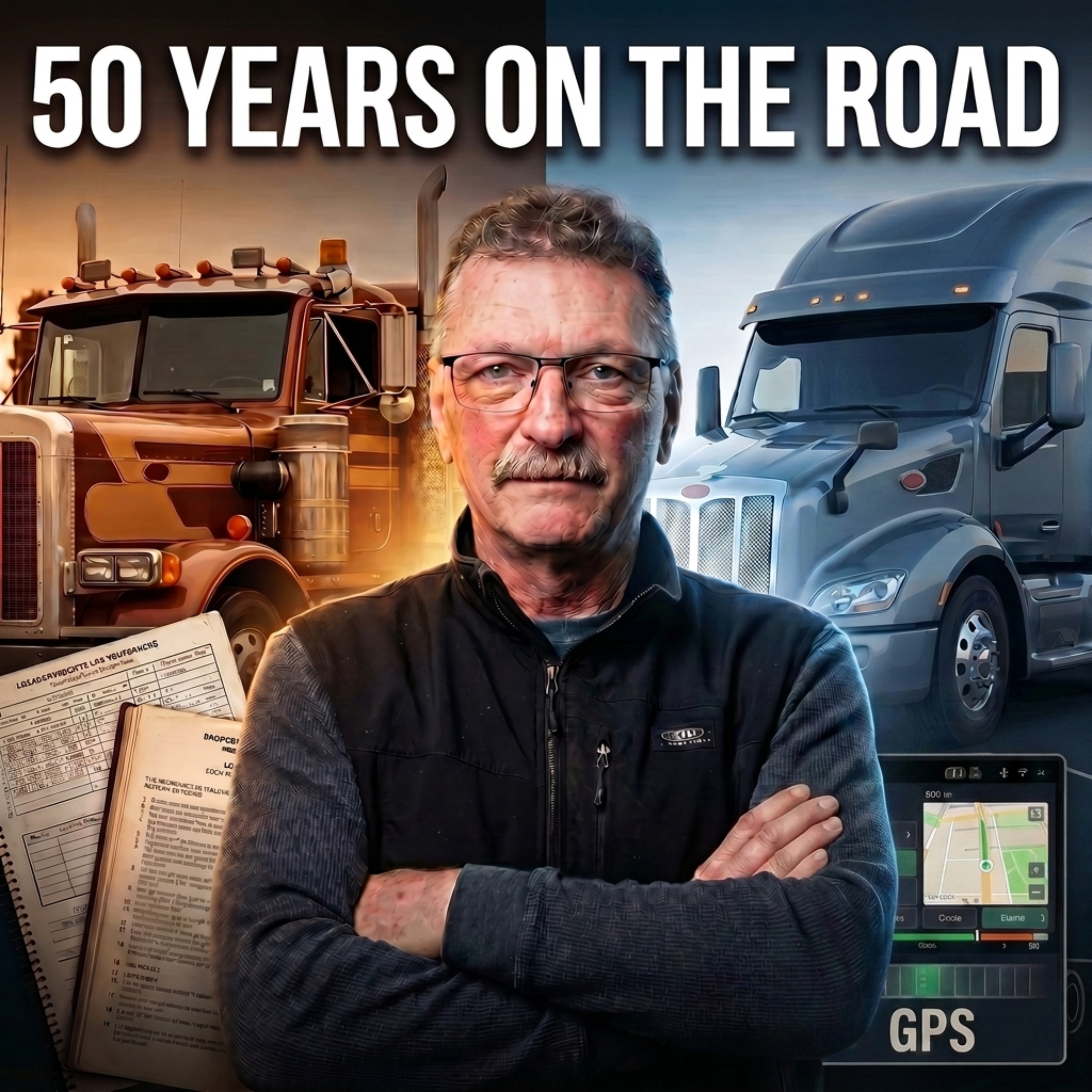
Dan started hauling 140,000-pound chip trucks through the UP woods at 17. Fifty years and a few million miles later, he sits down with Josh to talk about what trucking was, what it is now, and what every new driver needs to know.
🔑 KEY TOPICS
— 50 years of trucking experience across van lines, intermodal, heavy haul, and OTR
— The financial realities of owner-operator trucking— Why autonomous trucks face more obstacles than most people realize
— ELD regulations and how they’ve reshaped daily operations
— Practical advice: pre-trip habits, parking strategy, and navigating big cities— What intermodal drayage actually involves day-to-day
👉 SUBSCRIBE for weekly conversations about careers in the trades.
🔗 LINKS
Midwest Truck Driving School: https://midwesttruckdrivingschool.com
North Country Electrical Line & Heavy Equipment School: https://ncheschool.com
Listen on your favorite podcast app: https://built-in-the-midwest.captivate.fm/listen
📧 marketing@midwesttruckdrivingschool.com
📱 Follow us: @midwesttruckdrivingschool
Transcript
First truck I ever drove was this heavy haul chip truck.
Speaker A:One time I was in line to move Bill Clinton.
Speaker B:I'll tell you what, I'll never have a few million miles under my belt, so I'm a little jealous of that.
Speaker A:Does that customer want their stuff in that truck?
Speaker A:Maybe that's the most important part of this whole thing.
Speaker A:You do whatever you want.
Speaker A:That customer don't want their freight in a driverless truck, it's over.
Speaker A:You ain't got no hauling to do.
Speaker A:Get out there and make some money.
Speaker A:If you're thinking about a career in the trades and you want to know what employers actually look for, what the.
Speaker B:Work is really like, and what nobody tells you before you get started, you're in the right place.
Speaker A:Built in the Midwest features conversations that'll.
Speaker B:Help you figure out if this path is for you.
Speaker B:You and I have had a lot of great conversations over the years about trucking and the trucking industry.
Speaker B:And something I don't even know is if you were to go back to the beginning on when you got your cdl, what was your first thoughts about trucking?
Speaker B:How'd you get into the trucking industry originally?
Speaker A:Yeah, like a lot of people, it all started in the sandbox.
Speaker A:And that ain't no lie, because I don't know if kids do that anymore.
Speaker A:So we always wanted to drive truck.
Speaker A:Well, then dad got into trucking.
Speaker A:Dad, you got to show me how to drive.
Speaker B:Yeah, start in the sandbox.
Speaker A:Way we went.
Speaker B:Yeah.
Speaker A:I mean, you know, and then we got the advantage because dad owned the trucking company, so we got to jump in and go.
Speaker A:At 17, before you could really legally drive, you were able to drive your own.
Speaker A:Your own dad's trucks.
Speaker B:Oh, yeah.
Speaker A:So we were able to go down and get our chauffeurs, and first truck I ever drove was this heavy haul.
Speaker B:Chip truck at 17 years old.
Speaker A:17 Years old.
Speaker B:Get the heck out of here.
Speaker B:So you're still in high school.
Speaker A:It wasn't like luck.
Speaker A:We were running 130, 140,000.
Speaker A:Yeah.
Speaker B:I mean, most.
Speaker B:The majority of people in the trucking industry work their entire lives and not.
Speaker B:Not haul more than £80,000.
Speaker A:Yeah.
Speaker A:I mean, when you're running chip truck out of the woods, muddy roads.
Speaker B:Oh, yeah, that's.
Speaker B:That's a whole other boulder.
Speaker B:Right?
Speaker B:That's.
Speaker B:Yeah.
Speaker A:You go from black top to mud.
Speaker B:Oh, my God.
Speaker B:I'll tell you what.
Speaker A:Fun in the mud than you can imagine.
Speaker B:Oh, yeah, a little sarcasm there.
Speaker B:That's.
Speaker B:That's for sure.
Speaker B:Oh, I look at like the loggers.
Speaker B:And you know, even what we were just talking about hauling the oversized loads and these chip trucks in the woods.
Speaker B:And I give the loggers so much credit because what they.
Speaker B:Every day, it's like, all right, here we go.
Speaker B:Bring a big fire extinguisher.
Speaker B:Because that's what we're gonna be doing all day is putting out fires.
Speaker B:And especially, you know, this time of year when we have the frost coming out of the ground and people are getting stuck and buried in the woods.
Speaker B:And it's just, it's, it's.
Speaker B:It's crazy out there, but it's.
Speaker B:I think that's one of those things about trucking that I really enjoy is they say there's over whatever, over 200 different divisions of trucking now.
Speaker B:What divisions of trucking have you worked in?
Speaker B:You talk about, you know, you know, heavy haul on the chip trailer side of things.
Speaker A:Yeah, I mean, that's what got it started.
Speaker A:Then down the road we moved on to my own truck.
Speaker A:And then we started doing the van lines, which.
Speaker A:Which is around here.
Speaker A:I mean, there's nothing.
Speaker A:I don't think there's anything left for the van lines.
Speaker A:No.
Speaker B:And that was really popular back in the day.
Speaker A:You get this economy booming and that'll all come back.
Speaker A:Van lines in the big cities, you're down in Chicago.
Speaker B:And so people that don't know what van lines are.
Speaker B:Can you talk about that?
Speaker A:Well, movers, movers, furniture movers.
Speaker A:But we had customers that were snap on.
Speaker A:We had Mercury Marine.
Speaker A:They would move their bigger CEOs and stuff around the country, taking over divisions, moving around a lot of the stuff.
Speaker A:When California was growing in the 80s and 90s, that's where everybody was going.
Speaker A:2000S and beyond.
Speaker A:We're all moving out of there.
Speaker A:So that whole transition over 20, 30 years kept everybody in the van lines busy.
Speaker A:I mean, multiple van lines, not just one.
Speaker A:So you could climb the ladder at the van lines and do some really upper echelon moves.
Speaker A:The better you got, the better numbers you had.
Speaker A:For claims.
Speaker A:Less claims, they would give you better loads.
Speaker A:Celebrities.
Speaker A:At one time, I was in line to move Bill Clinton to D.C. really back in the day.
Speaker A:And something happened where it kind of fell apart and never got to jump on it.
Speaker A:Another time we were involved in New York with Kodak.
Speaker A:Kodak used to be big back in the day.
Speaker A:And they called me and asked me if I'd be interested in going to Hawaii.
Speaker A:Never did.
Speaker B:Come on.
Speaker A:It was one of those.
Speaker A:I kind of got ready for it and then told the wife, they said, you're going to get your customer loaded up in R.O.
Speaker A:Rochester, New York, which is the heart of Kodak.
Speaker A:And we're going to bring you to San Francisco.
Speaker A:We're going to wash your truck, and we're going to lift your whole truck up on the boat and you're going on a boat?
Speaker B:No, come on a boat.
Speaker A:And I. I told her all about it.
Speaker A:And by the time I got it to Rochester, all the dates changed, everything changed, and it fell apart like she was all, okay.
Speaker B:But that is.
Speaker B:That is crazy to me.
Speaker B:I'm gonna lift it on a boat and lift it on a boat and then take the boat out.
Speaker B:And this was a big CEO of.
Speaker A:Kodak, so that was gonna move one of their employees out of Hawaii, the big Island.
Speaker A:When you get there, obviously it's pretty small.
Speaker A:You're gonna go right to the warehouse.
Speaker A:Then what I would be doing is working to shuttle off of my truck in a little truck to where the residence is.
Speaker B:Yeah.
Speaker A:At the time, the agent would have been moving that customer into the warehouse.
Speaker A:So we'd have this operation going on for like two weeks.
Speaker A:This is all laid out.
Speaker A:And then it ended up canceling.
Speaker B:Oh, yeah.
Speaker A:Well, then they were going to put everything in that truck that I had and then get back on the boat and come back over here.
Speaker A:Transition them to the States.
Speaker A:Back to the states.
Speaker A:Wow.
Speaker A:Back to the mainland.
Speaker B:Get that out of here.
Speaker B:So, yeah.
Speaker B:And I think a lot of people, you know, this whole kind of conversation and this podcast is talking to young people and talking to people about kind of different opportunities that are out there and getting them kind of excited about that.
Speaker B:And so in something like this, you don't see it.
Speaker B:Yeah, that's kind of exciting.
Speaker B:You know, we just had someone come through.
Speaker B:This was a couple years ago, but I just talked to him here and he's been driving tour bus for some, like, major artists, you know, around the country.
Speaker B:And so.
Speaker A:Yeah.
Speaker A:Running the music tours.
Speaker B:Yeah.
Speaker A:Always kind of wanted tour.
Speaker A:Even nascar?
Speaker B:Yeah, yeah, yeah.
Speaker B:NASCAR brings.
Speaker A:Any type of racing you'd be committed to go.
Speaker A:I mean, but that's hard on the family.
Speaker A:But you do that when you're young.
Speaker A:These are things guys could pull off before they even think about having a family.
Speaker B:Yeah.
Speaker A:10, 15 Years, get it out of the way, work at it that way.
Speaker A:I mean, it's just the other thing I did get into the bigger cities, get into la.
Speaker A:They call me, what a move A.
Speaker A:You want to go to Seattle?
Speaker A:Sure.
Speaker A:You know, all the way up the west Coast.
Speaker A:Well, the wife.
Speaker A:I'm not coming home.
Speaker A:Yeah, it's hard on the family.
Speaker A:But where are you going?
Speaker A:I'm going to be taking a ferry ride from Seattle up into the San Juan Islands with a semi truck she goes.
Speaker A:Really?
Speaker A:Yeah.
Speaker A:We got a ferry booked.
Speaker A:The Anacortes ferry is north of Seattle.
Speaker A:You got a time, you got to be there in the morning and you get over to the San Juan's.
Speaker A:It's about 45 minute boat cruise.
Speaker B:Yep.
Speaker A:And you over there and you got to unload when you get there.
Speaker A:So you got to take your help with you and everything.
Speaker A:Wow.
Speaker A:End up unloading the whole day.
Speaker A:And even when you came back.
Speaker A:They run two ferries through the San Juans.
Speaker A:You had an option to run a Canadian ferry or a US ferry.
Speaker A:Well, if you run the Canadian ferry, you got to pass customs.
Speaker A:So I'm like, we'll just wait for the U.S. that way we can.
Speaker B:In the U.S. now, are these islands Canadian or.
Speaker A:They're American, but the ferries run through there.
Speaker A:Through the U.S. okay, gotcha.
Speaker A:There's two ferries that operate that island.
Speaker A:That's way north.
Speaker B:And was this somebody that you were.
Speaker B:That was moving there?
Speaker A:Yes, somebody was an LA City engineer retiring, moving them up there.
Speaker A:They were paying for the move.
Speaker B:Okay.
Speaker A:City paid for it.
Speaker A:Yeah.
Speaker B:Wow.
Speaker A:That type of stuff.
Speaker B:Wow.
Speaker A:Just stuff like that with the van lines.
Speaker A:You never know where you.
Speaker A:Yeah.
Speaker B:No.
Speaker B:What would you say?
Speaker B:You know, you're talking about the.
Speaker B:Talking about the family and I think that's important to talk about, especially people that are interested in this, is that, you know, being OTR is not as, you know.
Speaker B:And I want to be realistic and not paint it all roses and rainbows because it's not, it's really hard, you know, for being away from friends, being away from family.
Speaker B:Talk about that and how you kind of navigated that throughout the years.
Speaker A:Again, it was like a lot of people get in a situation where it's the money that determines whether you're coming home or not.
Speaker A:Right.
Speaker A:But you get in business knowing that the truck dominates everything.
Speaker A:It's the business you decided to get into.
Speaker A:So make your family available when you have enough money to go home and see them, whatever way it takes.
Speaker A:Like I told you, we flew home.
Speaker A:There was enough money in the van lines businesses you couldn't turn down.
Speaker A:That one always gave you a better load and a better load you couldn't refuse it and book a flight before everything got unloaded.
Speaker A:You sail that truck into Seattle, jump a flight and go home for a week.
Speaker A:Trust Me, they know your truck's in Seattle empty.
Speaker A:If they're busy enough, they'll get you another load, you fly back to Seattle, reload, get the hell out of here.
Speaker B:That's, that's crazy.
Speaker B:The truck would be in Seattle.
Speaker A:Yeah.
Speaker B:And you fly back home, find a good and spend some time with family and then come all the way back.
Speaker A:Most of the agents would let you park at their place out of the way.
Speaker B:Yeah.
Speaker A:At least leave it for a week.
Speaker A:Wow.
Speaker A:I mean, there was enough money in to do that.
Speaker A:Money's a little tighter these days, a little more expensive for everything.
Speaker A:But the other thing was if you do your numbers right and to get into a truck, if you are already having a problem, this is the owner operator going to have a problem, you know, and you didn't save enough money to get into a truck, maybe you should wait to save enough money to get into a truck so you don't get into those compromised situations where you don't have enough money to go home.
Speaker A:Maybe you should wait up savings.
Speaker B:I think that's some great advice because you see that and I see that all the time.
Speaker B:Talking to students where.
Speaker B:No, I just want to, I want to buy my own truck and be an owner operator.
Speaker B:And then I'm like, well, what happens when the, the turbo blows and it's, and it's five grand?
Speaker B:They're like, well, it's going to be a newer truck, so that shouldn't happen.
Speaker B:Turbos blow on newer trucks.
Speaker B:You know, these, these things happen.
Speaker B:You know what, what is your advice to somebody maybe just getting out of school, just getting their cdl.
Speaker A:The way I did it is I was able to save up enough money on my own, not even to buy the truck.
Speaker A:It was.
Speaker A:Once you get out there operating, always run around with, with cash at the time, kind of dangerous, but always had like a twelve thousand dollar buffer with me.
Speaker A:And I mean I just.
Speaker A:,:Speaker A:So remember when you go down, Remember.
Speaker B:When you go down, times have changed.
Speaker A:Times have changed.
Speaker B:Yeah.
Speaker A:When you go down, you're also not making money.
Speaker A:Yeah, that's the bad part.
Speaker A:You're spending money and not making money at the same time.
Speaker A:So that's why it's a, it's an ugly street.
Speaker A:So at times I had enough money to.
Speaker A:If the truck and I did blow it up a couple times on the road and had to have it done, we got a rental truck to continue on because you got customers to take care of sure.
Speaker A:Rented a truck.
Speaker A:Didn't really know.
Speaker A:But I know that I had dates to hit.
Speaker A:So I hit the dates, went and got a rental truck, finished it out, came back, got my truck after that, if you work for the right company, my company I was working for at the time, paid for the rental truck.
Speaker A:You're all stressed out about it after it was all over.
Speaker A:Paid for the rental truck.
Speaker B:Paid for the rental truck.
Speaker A:Didn't cost me anything.
Speaker B:So that way you could.
Speaker A:Because I was already spending money.
Speaker B:Yeah.
Speaker B:You can keep moving that way.
Speaker A:Keep moving.
Speaker B:Yep.
Speaker A:There's other things that may or may not happen, but that's.
Speaker A:Don't even know if that would.
Speaker A:So if you keep in good with your company, you have transmission issues and all that stuff.
Speaker A:A lot of these companies, if they want you to keep.
Speaker A:Keep going, we'll forward you the money to keep you going.
Speaker A:To allow to keep going, fund you to keep going if you don't have the means to do it.
Speaker B:Absolutely.
Speaker A:So there's a lot of this that you got to have good relations with the company.
Speaker A:That's hard to do.
Speaker B:Yeah.
Speaker B:Now.
Speaker B:So I have some experiences of having different breakdowns on the road.
Speaker B:But I want to get your opinion on this.
Speaker B:When you have a breakdown on the road for maintenance wise, what's been your experience has been mostly good or do they, let's just say like to.
Speaker B:Like to pad the bill a little bit.
Speaker A:I don't know, it's.
Speaker A:It's hard to tell because you don't really know the internals.
Speaker A:I'm not an internal engine guy.
Speaker B:Yeah.
Speaker A:I mean they must have done it right for me.
Speaker A:I mean I.
Speaker A:With all this new stuff, the electronics.
Speaker B:Oh yeah.
Speaker A:A lot of follow up.
Speaker A:I don't really know.
Speaker B:Yeah.
Speaker A:I just know this that if you were out in say Oregon and California, you do whatever you got to do to get.
Speaker A:Get it home.
Speaker A:But make sure when you do get home, you know, take time off with your family and get it fixed.
Speaker A:Right.
Speaker A:Somebody you know, if.
Speaker B:Absolutely.
Speaker A:Might be able to have it towed.
Speaker A:Yeah, we do heavy.
Speaker A:All we, we come and get you.
Speaker A:It's going to be pricey.
Speaker B:You've done that before.
Speaker B:You've gone out.
Speaker A:There's guys, there's guys out in Oregon that'll get it over here.
Speaker B:Really.
Speaker A:You know, I'll be going get up.
Speaker A:You got to contact a few people, start asking questions.
Speaker A:You know, that's why you got a phone.
Speaker A:But well.
Speaker B:And it's just.
Speaker A:Is it easier?
Speaker A:Is it going to be $3,000, get it hauled back here.
Speaker A:As opposed to a $30,000 rebuild.
Speaker A:You don't.
Speaker A:Yeah, trust.
Speaker B:Exactly.
Speaker A:Get it to your reputable guy.
Speaker A:104 Trucking big.
Speaker B:Yeah, exactly.
Speaker B:Isn't that the truth?
Speaker B:Oh yeah.
Speaker B:So.
Speaker B:And it seems like I see that more and more where you see guys like you, they, you know, you get a big truck breakdown like an engine or a transmission in Iowa, it's like, nope, we'll just run down there and grab it because we trust our own people.
Speaker A:Well, right.
Speaker A:That's hard to do.
Speaker A:You know, motor stuff is.
Speaker A:That's why guys end up going with crate motors to get, get the warranties.
Speaker A:Oh sure.
Speaker A:They don't even, they swap them out.
Speaker B:So a lot, you know, and I've heard of that too, where a lot of, A lot of companies don't even do their own rebuilds nowadays.
Speaker A:Thousand dollar crate motor, but you're still down for a week and a half trying to get into a shop you don't even know.
Speaker A:No, even worse.
Speaker B:But then you actually have a warranty on it.
Speaker B:Because if, if you, if you say personally do the rebuild, there's no warranty on that.
Speaker A:You know, you got a warranty as long as that company's still in business.
Speaker A:What's a warranty?
Speaker B:Yeah, exactly.
Speaker B:And who's, who's signing that warranty, you know, who's going to go to go to bad for you?
Speaker B:You know, so something on a kind of different, different direction that, that, that I've actually gotten calls about like, and they're worried about autonomous trucking and AI and you know, do you, what are your thoughts on that and do you see that being, being a problem with, with people getting into the industry moving forward?
Speaker A:I do.
Speaker A:But there's nothing we can do about it because it's a free market to do whatever they want.
Speaker A:If they feel free to put driverless trucks on the road, there's nothing I can do about it.
Speaker B:I was at a conference last year in San Antonio and they said they really didn't think this was going to happen in a massive scale for like 40 to 50 years.
Speaker B:And they said.
Speaker B:And you know, and one of the correlations they said to me, and I'm curious what your thoughts are is like so commercial planes have been autopilot autonomous 95% of the time for the last like 50 years.
Speaker B:And yet there still needs to be two commercial pilots in every single plane.
Speaker B:So even if we have that autonomy, right.
Speaker B:And there's still probably going to be a driver there just in case to make sure nothing, nothing goes awry and there's no issues.
Speaker A:I don't worry about it.
Speaker A:Like most of the stuff I do, it ain't gonna work.
Speaker B:Yeah.
Speaker A:I mean standard freight bot, dock to dock stuff.
Speaker A:Yeah, there's going to be possibility of that happening, but it's only going to take one accident.
Speaker B:Yeah, exactly.
Speaker A:And it's over.
Speaker A:I mean, how the rest of the guys that actually driving the truck for the company, they got one autonomous truck.
Speaker A:It's only a matter of time.
Speaker A:You've seen it.
Speaker B:Yeah.
Speaker A:And you still got to have two drivers in it.
Speaker A:So it's an overpriced truck with overpaid drivers.
Speaker A:Doing nothing.
Speaker B:Doing nothing.
Speaker B:Yeah.
Speaker A:That ain't going to go nowhere.
Speaker B:Well, and I think, you know, I think the technology and trucking, you know, we, we do have a long ways to go.
Speaker B:I mean the fact of the matter is, is you should be able to sit behind the wheel, let go of the wheel and let it from.
Speaker B:I'm thinking on like Nebraska, going across Nebraska, 600 miles.
Speaker B:It's completely straight.
Speaker B:Completely straight.
Speaker B:Like we don't have a truck right now that you can just let go of the steering wheel and let it, let it drive straight for 600 miles.
Speaker B:And so that, that literally doesn't exist, you know.
Speaker B:And let alone, let alone the autonomous AI trucks, it's like, here's the other thing.
Speaker A:Nobody even thinks about the customer.
Speaker A:Does that customer want their stuff in that truck?
Speaker A:Maybe that's the most important part of this whole thing.
Speaker A:You do whatever you want that customer to want their freight in a driverless truck, it's over.
Speaker A:You ain't got no hauling to do,.
Speaker B:You know, so that's a huge, that's a huge aspect.
Speaker A:Might not be hauling anything.
Speaker B:Who's in charge of that load?
Speaker B:Who's going to make sure that load is secure and safe and, and who's gonna do the pre trip on the truck and trailer?
Speaker B:I think, you know, a lot of people are getting way ahead of themselves with saying that stuff because it's like who's gonna back up to the dock?
Speaker B:Who's going to fuel the truck up?
Speaker B:I mean there's a lot of stuff.
Speaker A:Here you already know.
Speaker A:We've fought for years trying to get more room on those trailers for the customer to ship more product.
Speaker A:You move into the EV trucks, they're so weighted down, very few products are gonna make it.
Speaker A:You can't get a full load on that truck just because of that truck is so heavy.
Speaker A:So again, we're right at the customer.
Speaker A:We're have to charge you more to haul Less.
Speaker A:That ain't ever going to fly.
Speaker B:No, no, exactly.
Speaker B:I don't see them reducing the amount that, you know, we can.
Speaker A:If I was.
Speaker A:I mean, it's a salesman issue.
Speaker A:If I was trying to sell you an electric truck, I'm going to pump it up, you know.
Speaker B:Of course.
Speaker B:Absolutely.
Speaker B:Absolutely.
Speaker A:Will it make money for you?
Speaker A:Will it keep the customer happy?
Speaker A:God only knows.
Speaker B:Yeah, well, we'll see.
Speaker B:And that's where, you know, I'm curious what.
Speaker B:And I know a lot of things have changed, but what's been some of the big things that have changed in trucking from when you first started to today and now remind me of that span again.
Speaker B:Couple years.
Speaker A:17 Years.
Speaker B:17 Years.
Speaker A:60.
Speaker B:Yeah.
Speaker A:66.
Speaker A:Going on 67.
Speaker B:Yeah, yeah.
Speaker A:There's a few million in between there.
Speaker B:A few million miles in between.
Speaker B:I mean, I'll tell you what, I'll never have a few million miles under my belt, so I'm a little jealous of that.
Speaker A:And I sit in that seat for a long time.
Speaker B:Yeah.
Speaker B:Yeah.
Speaker B:So.
Speaker B:So what are some of those big changes that you see?
Speaker B:I mean, it's probably.
Speaker B:There's so many.
Speaker B:It's probably hard.
Speaker A:I don't know.
Speaker A:Trucks, the trucks themselves, you know, the motors, the E logs, all that stuff.
Speaker B:Oh, yeah, yeah.
Speaker B:Elds.
Speaker B:I know.
Speaker A:I mean, I, I get.
Speaker B:Everyone loves those.
Speaker B:Yeah.
Speaker A:I totally get the log thing, but in some instances, I think it's.
Speaker A:It's not right for some.
Speaker A:Yeah, it is.
Speaker A:Right.
Speaker B:Yeah.
Speaker A:You know.
Speaker B:Well, and that's, I think.
Speaker B:Is that.
Speaker B:Is that another case of.
Speaker B:There was a handful of guys kind of renegades that were breaking the rules, causing accidents, and, and then the whole industry, you know, or the feds just went down on everybody and now everyone gets punished.
Speaker A:That's what they claimed, right?
Speaker A:That's the people selling you Elog claiming that bunch of them rodeo cowboys tearing it up.
Speaker B:Yeah.
Speaker A:Well, I'd love to see the numbers.
Speaker A:How many cowboys are still tearing it up with Elog?
Speaker B:Yeah.
Speaker A:You know what I mean?
Speaker A:They won't post those numbers.
Speaker B:No, no.
Speaker B:And.
Speaker B:And there's actually, I was just reading transport topics the other day and they did, you see, they pulled like a couple dozen ELD NETC logs because of their ability to cheat them and people would like zero program them differently.
Speaker B:And I'm like, you know, people are going to find a way.
Speaker A:I had them for 20 years and we're doing the same thing.
Speaker A:Whenever we got a new E log set up, it purposely would do everything that.
Speaker A:That thing possible because then you could claim Stupidity.
Speaker A:I didn't know that.
Speaker B:I didn't know about that.
Speaker B:And even, even the PC time that seems like a lot of people are, are pushing the personal conveyance where.
Speaker B:Yeah, I drove from here to Chicago.
Speaker A:It was personal conveyance before you couldn't advance the load.
Speaker A:Now you can in personal conveyance.
Speaker A:But only yard move was the other one.
Speaker B:Yeah, yeah.
Speaker A:The reason they changed yard move was because of me.
Speaker B:Why is that?
Speaker B:There's a story here.
Speaker A:When I was running rail yards, I'd get into one rail yard, then I'd have to go to another rail yard.
Speaker A:Well, conveniently would stay in yard move from one yard to another.
Speaker A:But that could be stayed in between.
Speaker B:That could be an hour.
Speaker B:Yeah, a couple hours.
Speaker B:Still in yard mode.
Speaker B:I'm still in the yard.
Speaker A:Then they spent speed limits on it.
Speaker A:Then they, they spent distance on it and locked it all down.
Speaker B:Yep.
Speaker A:And still to this day, if you're cruising around a yard, you know everybody's doing the E log creep, five miles an hour trying to stay in yard move.
Speaker A:The biggest thing is the DOT break.
Speaker A:They allowed the yard move to actuate as a DOT break.
Speaker A:So here you are doing the five mile an hour yard creep and you're actually taking your break at the same time.
Speaker A:Yeah, they allowed yard move.
Speaker B:They allowed yard move for that 30.
Speaker A:Minute three and a half hour.
Speaker B:That like 30 minute provisional.
Speaker B:Yes.
Speaker B:Now you can take that.
Speaker A:Throw it in yard move.
Speaker B:Throw it in yard move.
Speaker B:That's a nice little trick right there.
Speaker A:Some companies will again, they can lock that out.
Speaker B:Okay.
Speaker A:Yeah.
Speaker A:I mean I got guys creeping around my yard right now over there.
Speaker A:You know gps.
Speaker A:If you're on a GPS system, you're out on a legal street.
Speaker A:And yard move.
Speaker A:Well, that's not legal either.
Speaker B:No, no.
Speaker B:And, and that five miles an hour is, is boom.
Speaker A:You.
Speaker B:Yeah, that's the cutoff to when it automatically goes to driving and then it starts working down your driving time.
Speaker A:Right.
Speaker A:So or a distance they say, oh, at 300 yards it's can't be yard move anymore.
Speaker A:You're going.
Speaker A:They can lock that out.
Speaker B:They can do the test on that.
Speaker A:Probably why they did the upgrades and eliminated some of them E logs that were not doing it or companies were turn around and violating it on their own issue.
Speaker A:Their safety guys get in there and manipulate.
Speaker A:Now they've got it to where you could go in and redo your log afterwards.
Speaker A:And we got companies not allowing you to redo your log.
Speaker A:They have to be there while you're operating or renovating your log.
Speaker B:Okay, yeah, so, so like they have to approve those edits.
Speaker B:And log editing used to be on.
Speaker A:My discrepancy because I'm the one responsible for it.
Speaker B:Now.
Speaker A:Companies will not allow log edit that.
Speaker B:You know, it's one of those, one of those regulations.
Speaker B:And I think about when that came out and then they, and then they, they did all that funky stuff and changed the hours of service and you could only take one 34 hour reset and, and it had to be two periods between 1 and 5am you remember that?
Speaker B:Like, and that was that they end up getting rid of that because they said all these drivers, 5:00am, boom, they were hitting the road.
Speaker B:It was like mass congestion and.
Speaker A:Well, that's not the other part of it.
Speaker A:Nobody travels at night.
Speaker B:Yeah.
Speaker A:I mean roads are clear at night.
Speaker A:If you can run those hours, you can put a lot of miles in at night.
Speaker B:Exactly.
Speaker B:In any major city, you hit Chicago,.
Speaker A:Atlanta, if you, whatever truck stops by three or four in the afternoon, you ain't getting a parking spot because everybody's on that same schedule.
Speaker A:So somehow you need to shift your schedule, if you can, to run better hours.
Speaker B:So.
Speaker B:So when I drove 15 years ago, you know, I saw this a little bit, but nowhere near what you see today.
Speaker B:It seems like I'm seeing trucks parking on ramps all over the place.
Speaker B:So why is there such a big truck truck parking shortage?
Speaker A:They don't plan ahead.
Speaker A:Planning E log and planning is brutal.
Speaker A:Planning ahead your day instead of playing on your phone.
Speaker A:Planning your day.
Speaker A:Good advice where you can get to and get there in a reasonable amount of time.
Speaker A:Get your reserved parking if you can, you know, if it's free.
Speaker A:If you're looking at a free parking spot.
Speaker A:These guys don't plan.
Speaker A:So they sit on the side of the freeway.
Speaker A:Because when they're out hours, that's as far as they go.
Speaker A:I seen them on the tollways now all the time they just go till they run out.
Speaker B:Just go till they run out and then park on the side.
Speaker B:Now is there any advice, you know, advice to those guys like.
Speaker B:Yeah, I like that.
Speaker B:Plan ahead.
Speaker B:Know about when you're gonna run hours and would you say, do you like to.
Speaker B:An hour before your time.
Speaker B:Yeah.
Speaker B:To start looking.
Speaker A:Well, in two hours you already seen what goes on.
Speaker A:They plan ahead.
Speaker A:As far as sitting at the fuel island for a half hour.
Speaker B:Yeah.
Speaker A:Then pissing everybody off.
Speaker A:That's not right.
Speaker B:No, exactly.
Speaker A:That's not right to anybody else that's got to go.
Speaker B:Don't pull their drone.
Speaker A:Don't feel as if you're that important.
Speaker B:Yeah.
Speaker A:Get the hell out of the way.
Speaker B:Yeah.
Speaker A:People want to go.
Speaker B:Yeah.
Speaker A:I got teams that don't.
Speaker A:Can't afford that kind of time.
Speaker A:You know, stuff like that.
Speaker A:I mean, there's no more etiquette left out there, but hopefully.
Speaker B:Why is that?
Speaker B:Why is that?
Speaker A:Because it's about themselves rather than everybody else, you know, Think about everybody else too, you know?
Speaker B:Yeah.
Speaker B:You know, that's.
Speaker B:You know, that's one thing I love.
Speaker B:The UP is.
Speaker B:It's one of those places when I lived downstate for a while and came to the up.
Speaker B:You know, you break down on the side of the road or you run out of gas, anything.
Speaker B:I mean, in the U.P.
Speaker B:I could bet it won't be five minutes before somebody is there stopped to help you fix that tire, to help you get gas in your car, whatever, you know what I mean?
Speaker A:So all that's changed.
Speaker A:Elog changed all of that.
Speaker A:Even at the truck stops, you know, so nowadays it's.
Speaker B:It's very different.
Speaker B:Everyone's hurry and everyone's.
Speaker A:So if you're in a hurry every time you're somewhere, did you really do a good pre trip or a post trip because you're in a hurry?
Speaker B:Yeah, probably not.
Speaker B:Probably not.
Speaker B:Yeah, because you're.
Speaker B:When you do your pre trip, you're on duty and that's eaten away at your logbook and so that almost makes you rush things.
Speaker B:Yeah, maybe more.
Speaker B:More than you should.
Speaker B:Yeah, absolutely.
Speaker B:You know, speaking of kind of doing your pre trip and you know, a lot of guys today, and I feel like it's getting worse, they just take their key, stick in ignition start and.
Speaker A:Go sit there and play on their.
Speaker A:Sit there and plan.
Speaker B:Yeah.
Speaker B:Play on their phone.
Speaker A:Give it 10 minutes going.
Speaker A:Yeah, I did.
Speaker B:Man, they got to scroll the tic Tac for a few minutes.
Speaker B:You know, what would be your advice to, you know, you know, someone getting in the trucking industry and kind of doing it the right way, the safe way, when it comes to doing a good pre trip.
Speaker A:Just got to take the time to do it.
Speaker A:10 Minutes.
Speaker A:I can do a good pre trip in 10 minutes.
Speaker A:But at least you're looking over everything.
Speaker A:Yeah.
Speaker A:You know what else you gonna do?
Speaker A:You might.
Speaker A:You might as well get out and look around.
Speaker A:I mean, surprising what you might find looking around.
Speaker B:What are the main.
Speaker A:Especially on relay units.
Speaker A:Cause these guys come in, this truck just got off the road.
Speaker A:You're relaying it to another location.
Speaker A:Location.
Speaker B:Oh yeah.
Speaker A:Where we get stuff that's been set there all night.
Speaker A:But as you know, everything that sets her all night is the best time to find out if the tires actually have air.
Speaker B:Yeah, absolutely.
Speaker B:If the tires have air, the puddles underneath the trucks, you know, that's when you'll see a.
Speaker B:A tiny little power steering leak.
Speaker B:Let that truck sit there when it's warm at nighttime and see a nice puddle underneath.
Speaker B:Okay.
Speaker B:Yeah.
Speaker A:So, you know, they come in and they've got a tough schedule.
Speaker A:Well, okay, I'm going to.
Speaker A:You can't really speed through a pre trip.
Speaker A:I mean, you got 10 minutes.
Speaker A:Do it.
Speaker A:Take the time to do it.
Speaker A:Right.
Speaker A:Because you and I both know tire failure is probably one of the biggest.
Speaker A:Yeah, didn't.
Speaker B:Yeah.
Speaker A:Well, then you're going to.
Speaker A:There's no roadside left up here.
Speaker A:No, we can't get anybody at night do roadside.
Speaker A:No, you're on your own.
Speaker B:So what.
Speaker B:What do you do up.
Speaker B:If you blow a tire up here where you don't have that roadside, it's two o' clock in the morning.
Speaker A:You got to wait.
Speaker A:You're just.
Speaker A:Then you don't even log in.
Speaker A:So everything's going to get delayed.
Speaker A:Yeah, but that's, you know, did the guy do a good post trip or did it happen overnight?
Speaker A:There are tires you can run that go low on air.
Speaker A:You can.
Speaker A:You can run them the next day.
Speaker A:If they're just low, ear them up.
Speaker A:But then when you get back, get that thing checked, see if there's something in the tire.
Speaker B:Exactly.
Speaker B:So say it's got a very small leak.
Speaker B:It's like you might be able to limp it back, you know, air it up, keep it full.
Speaker B:If it's not, Asia said the air hose.
Speaker A:Gotta have that air hose.
Speaker A:It's that, that's.
Speaker A:That could save you hours.
Speaker A:Just those little tips, like he was suggesting.
Speaker A:We did the same thing and we were in railroad containers, which is the worst fleet in the country.
Speaker B:Oh, yeah.
Speaker A:Pile of junk in a pile.
Speaker B:Terrible.
Speaker A:They take it out of the pile.
Speaker B:And give it to those.
Speaker B:Yeah.
Speaker B:So you're on your own now.
Speaker B:Was that for intermodal?
Speaker A:Intermodal.
Speaker B:Intermodal.
Speaker B:All right.
Speaker B:Dreaming.
Speaker A:So was a Draymond for 10 years.
Speaker A:A real Draymond, really.
Speaker B:So a lot.
Speaker B:A lot of people don't know what intermodal is.
Speaker B:Just describe that to somebody that never heard that word before.
Speaker A:The pool, like I just said, the largest pool that never gets looked at because there was a bunch of.
Speaker B:Until maintenance on this stuff.
Speaker A:Stack the chassis up.
Speaker A:Literally stack them 10 high, stacked the containers.
Speaker A:Six, eight high, loaded, empty.
Speaker A:You're assigned a yard and a trailer number.
Speaker A:Box number.
Speaker A:When you get a box number, if you get there and it's off the train and on a chassis.
Speaker A:Not necessarily mean it's good chassis.
Speaker A:There's other.
Speaker A:Each yard has its own idea of how you get a chassis.
Speaker A:If yours is no good, the dot is bad.
Speaker A:Flat tires, wiring, all kinds of stuff right in front of you.
Speaker A:You could spend two hours just flipping that chassis to a good one.
Speaker A:So then they let you go look for a good chassis, find one.
Speaker A:But you only can look in specific lots.
Speaker A:They didn't tell you that.
Speaker A:Not anyone available.
Speaker B:Oh.
Speaker A:Because in the 40s and 20s, the chassis owner has to match up with the box owner.
Speaker A:That's important because those are the ship lines tied to all these chassis and boxes.
Speaker A:So they only want you to use their chassis.
Speaker A:Their chassis assigned to their boxes.
Speaker A:They own two or three.
Speaker A:See, that's the part of the:Speaker A:It's all designed to go to the coastlines and get on ships and go for a ride.
Speaker A:Depending on what you got.
Speaker A:Or you're picking up stuff that's coming in from overseas.
Speaker A:They want only use their chassis to get to the customer, do the delivery, bring it back to the yard, take it back apart.
Speaker A:Some yards will let you park it empty.
Speaker A:Some yards will have you take it back apart and put it in the empty line.
Speaker A:So that could be some of the yards.
Speaker A:You could be in lines 20 deep of different trucks doing the same thing.
Speaker B:Doing the same thing.
Speaker B:And you're waiting.
Speaker A:You're waiting.
Speaker A:Yeah.
Speaker A:Wow.
Speaker A:So it's a map of the yard.
Speaker A:Some of these rail yards are two miles by a mile.
Speaker A:You can get lost in a rail yard.
Speaker B:Oh, my God.
Speaker B:Especially I'm thinking of, like, Chicago.
Speaker A:Yeah.
Speaker A:Massive.
Speaker B:And you go over those rail yards.
Speaker B:I wouldn't even know where to begin.
Speaker B:I mean, they're just so big.
Speaker A:Well, you.
Speaker A:Huge.
Speaker A:We used to get fingerprinted to get in these yards.
Speaker A:Because you can't have any Tom, Dick and Erie in there.
Speaker A:No, you're gonna.
Speaker A:Then you.
Speaker B:So was that via like a.
Speaker B:For like a Twick card or.
Speaker A:No, not a twit card.
Speaker A:It was just set up for that particular rail yard.
Speaker B:Okay.
Speaker B:Yeah.
Speaker A:And be registered in there.
Speaker A:So we are when you come in.
Speaker A:And when you come in, then you enter into a kiosk what you're after.
Speaker A:They'll give you a location.
Speaker A:Go from there.
Speaker A:It might be all there on a good chassis ready to go.
Speaker B:It might not.
Speaker A:It might not even be on a chassis.
Speaker B:But essentially you had to have a background check before.
Speaker A:Yeah, yeah.
Speaker B:They wouldn't let just anybody in there.
Speaker A:Like 10 different rail yards.
Speaker A:Yeah, get that all out of the way and then you're good to go.
Speaker A:So if it didn't have a chassis, 53s were usually on a chassis.
Speaker A:40S and 20s are in the stock.
Speaker B:Okay.
Speaker A:So then you get a stock location about a mile long, 20 wide, 20 high.
Speaker A:And they've got a gantry crane working the stock.
Speaker A:So you got to get in there and vertically look through.
Speaker A:They leave enough lane for you to get out of your truck and walk.
Speaker A:But they give you a letter, you park in the letter location.
Speaker A:Then you physically got to go wait for the gantry to get to you.
Speaker A:Now again, you're in line with 20 trucks on both sides of stack getting boxes.
Speaker A:So you got to get coordinated with the operator.
Speaker A:Some of the, some of the gantry cranes are 150ft tall.
Speaker A:You got to walk up to the base, operate the radio on the gantry crane.
Speaker B:150Ft tall.
Speaker A:Right?
Speaker A:Wow.
Speaker A:Well, they're above the stack.
Speaker B:Yeah, they're above everything.
Speaker A:They're above everything.
Speaker B:I don't think most people can really understand the massive size of this thing.
Speaker A:Well, the big stack.
Speaker A:So they, they, they spread over the stack and there's certain areas that these big wheels travel on.
Speaker A:You got to stay out of the wheels way or you get run over by these things.
Speaker A:You got to get inside of the crane and stay inside of the crane.
Speaker A:It's bad stuff.
Speaker B:It's like a, like a big, like a life size game of Pac Man.
Speaker A:Oh yeah.
Speaker A:This thing's massive.
Speaker A:So you know, you might get after you find your box and you're pipe parked, this guy say runs east west on the stack.
Speaker A:The line your box is in on is north south from you.
Speaker A:So you're in line.
Speaker A:And sometimes if they don't have a radio, you've got a finger.
Speaker A:You know, you gotta stack to box 10.
Speaker A:You're using hand signs or he already knows where your box is.
Speaker A:But you've seen this mess.
Speaker A:It could be at the bottom three rows in.
Speaker A:Trying to tell him that with your hands or without communication is ugly.
Speaker A:But you see where your box is and as he's loading other trucks there, he's moving other boxes to get to this box.
Speaker A:And he might be stacking all these boxes on your box.
Speaker A:When he gets to your box then he's got to move all these again.
Speaker A:Yay.
Speaker B:And you're watching all this, watching all.
Speaker A:This go on going.
Speaker A:I don't know how long I'm going to be here.
Speaker B:Yeah, it's going to be a minute.
Speaker A:So, you know, the other thing in that is you got to make sure when you're parked, you're facing the east, west, like I explained.
Speaker A:Because when he grabs your box, some of these cranes don't have the ability to do a360 or a180 on you.
Speaker A:You're not paying attention in the dark.
Speaker A:You'll put your box on backwards.
Speaker A:Oh, doors are in front.
Speaker A:How'd that happen?
Speaker B:Doors are in front.
Speaker B:Yeah.
Speaker B:And then it'll fit on her.
Speaker B:And then how do you secure those inner boxes, all them locks?
Speaker A:That's the other thing.
Speaker A:When you look for a chass, you got to make sure all them locks are good.
Speaker A:Part of that pre trip.
Speaker A:That's why Draymond are.
Speaker A:It's all different game.
Speaker B:Yeah, absolutely.
Speaker B:It's very different because, you know, I think the average person looks at a.
Speaker B:At a container versus, like a dry van or a reefer van.
Speaker B:They look the same, you know, kind of.
Speaker B:You know what I mean?
Speaker B:But obviously they're complete.
Speaker B:The bogey assembly, even the frame.
Speaker B:Because.
Speaker B:Because those containers are sitting on essentially a full frame and bogey assembly compared to a drive in that's all connected.
Speaker B:So it's a very different kind of trucking and stuff like that.
Speaker B:Like.
Speaker B:Yeah.
Speaker B:Making sure the doors are facing the right way.
Speaker B:That's kind of a problem.
Speaker B:The doors are facing the cab.
Speaker A:Absolutely.
Speaker B:A little hard to unload that puppy.
Speaker A:Absolutely.
Speaker A:I mean, that's all part of it.
Speaker A:You learn that.
Speaker A:Because if you messed it up once, you'll never do it again.
Speaker B:Yeah, yeah.
Speaker A:53 Is never a problem because they typically can't even go on or backwards.
Speaker B:Okay.
Speaker A:That's why Most of the 53s are mounted on chassis before you get in the yard.
Speaker A:That's why I stuck to a lot, doing a lot of 53s.
Speaker B:Okay.
Speaker A:They got the bigger floor ratings, and they're good for paper.
Speaker A:That's why we were all on paper.
Speaker A:We did a lot of 53.
Speaker B:Oh, yeah.
Speaker A:There's no paper.
Speaker A:You got to do something else.
Speaker A:So it gives you the option to go all over.
Speaker B:Absolutely.
Speaker A:But you gotta.
Speaker A:You gotta know Chicago well.
Speaker B:Yeah, exactly.
Speaker B:Yeah.
Speaker B:You know, and I.
Speaker B:You know, there's a lot of people that have never driven through Chicago with a.
Speaker B:With their personal vehicle, let alone.
Speaker A:Yeah.
Speaker B:Let alone a semi, truck and trailer.
Speaker B:What's your best advice for someone going to Chicago for the first time on navigating Chicago?
Speaker B:I'm thinking of all the low bridges that are down there.
Speaker B:Right.
Speaker A:Everybody's trying to use a tool to get the route right.
Speaker A:They want a trucker map with a height set that they don't have to pay attention to.
Speaker A:I don't really know if there's one I trust yet.
Speaker B:Really.
Speaker A:Well, they have them, but I don't know if I'd trust them.
Speaker B:Yeah, right.
Speaker A:Everything's.
Speaker B:And you still gotta be smarter than the technology.
Speaker B:Absolutely.
Speaker B:I mean, look at.
Speaker B:Oh, my GPS sent me over a pedestrian bridge that's barely wide enough for a golf cart.
Speaker B:But I took my semi truck across it, right.
Speaker A:And as you know, I mean, they've dug a lot of the bridges out in Chicago over the years, but there's still a lot of them that aren't.
Speaker A:Not as many.
Speaker A:Everyone was an old 10 foot, 12 foot.
Speaker B:Oh, yeah.
Speaker A:Oh yeah.
Speaker B:You had a zigzag around a lot of low bridges for many years.
Speaker A:I take Google Maps.
Speaker A:Western Avenue is pretty good, except get in right.
Speaker A:Downtown Western Avenue is a major through street.
Speaker A:Well, I'd be sitting on 94 and right when you come into Chicago and.
Speaker A:And it's just stopped.
Speaker A:It could be a wreck.
Speaker A:You could be there for an hour.
Speaker A:So I'm looking at the exit going, how do I get through here?
Speaker A:You know, I pull up Google Maps, right?
Speaker A:That's the common thing to do if you're sitting still.
Speaker A:Pull up your phone, can't move.
Speaker A:You go right to your live view of street maps and it shows you the actual.
Speaker A:What your street looks like.
Speaker A:The buildings street view will give you the actual building.
Speaker A:So if you drop your pin, you zoom down as tight as you can.
Speaker A:Drop your pin right on the highway.
Speaker A:As soon as you get street view, turn that boy around and look at the sign and says how high that bridge is.
Speaker A:Because it'll be posted at that bridge.
Speaker B:But that street view, I think that's a nice little hack right there.
Speaker B:Literally turn it around and you'll be able to see that sign.
Speaker B:And that's really the best way to know is like what's posted on the sign by the dot.
Speaker B:Okay, that's.
Speaker B:That.
Speaker B:That's the.
Speaker A:That's probably the best advice anybody can do.
Speaker A:You can walk your way across town in places you've never been.
Speaker A:You got 15 minutes to go over your phone.
Speaker A:You can get yourself through town without worrying about it.
Speaker A:You know, the bridge is when you.
Speaker B:Go, and then you can really take it one intersection, one street at a time.
Speaker B:You know, because anyone can get down there.
Speaker B:You know, you pretty much take the highway all the way down there.
Speaker B:It's once you get into the inner city and different things where it's like okay, what about now?
Speaker B:But in the grand scheme of things, you know, it's.
Speaker B:It's relatively easy until you get into.
Speaker B:Into the town and then that's when everything changes.
Speaker A:Yeah.
Speaker B:Is there any other advice before we wrap this up on.
Speaker B:On new.
Speaker B:New new new CDL drivers just making their way into the industry.
Speaker A:I think it's a good business to be in.
Speaker A:I mean things are going to change here.
Speaker B:I feel like things are already starting to pick up.
Speaker A:Yeah.
Speaker A:I mean we get.
Speaker A:Everything is related to volume.
Speaker A:So we just do a lot of different things in this business.
Speaker A:But be universal.
Speaker A:Keep a wide open mind of what you want to do when you get into this.
Speaker A:Freighting is just the beginning of it.
Speaker A:The way I look at it, anybody can freight.
Speaker A:Once you get into the business, start looking for something you enjoy a little different.
Speaker A:Could be anything.
Speaker A:Could be hauling machinery.
Speaker A:It could be sticking.
Speaker A:Afraid some guys like it.
Speaker B:Yeah.
Speaker A:Home time, all that's important.
Speaker A:Get out there and make some money, you know.
Speaker B:Absolutely.
Speaker A:It's all about.
Speaker B:Absolutely.
Speaker B:Oh, I love it.
Speaker B:Well, thank you again for joining us today.
Speaker B:Really appreciate it and have yourself a great day.
Speaker B:Thank you.