
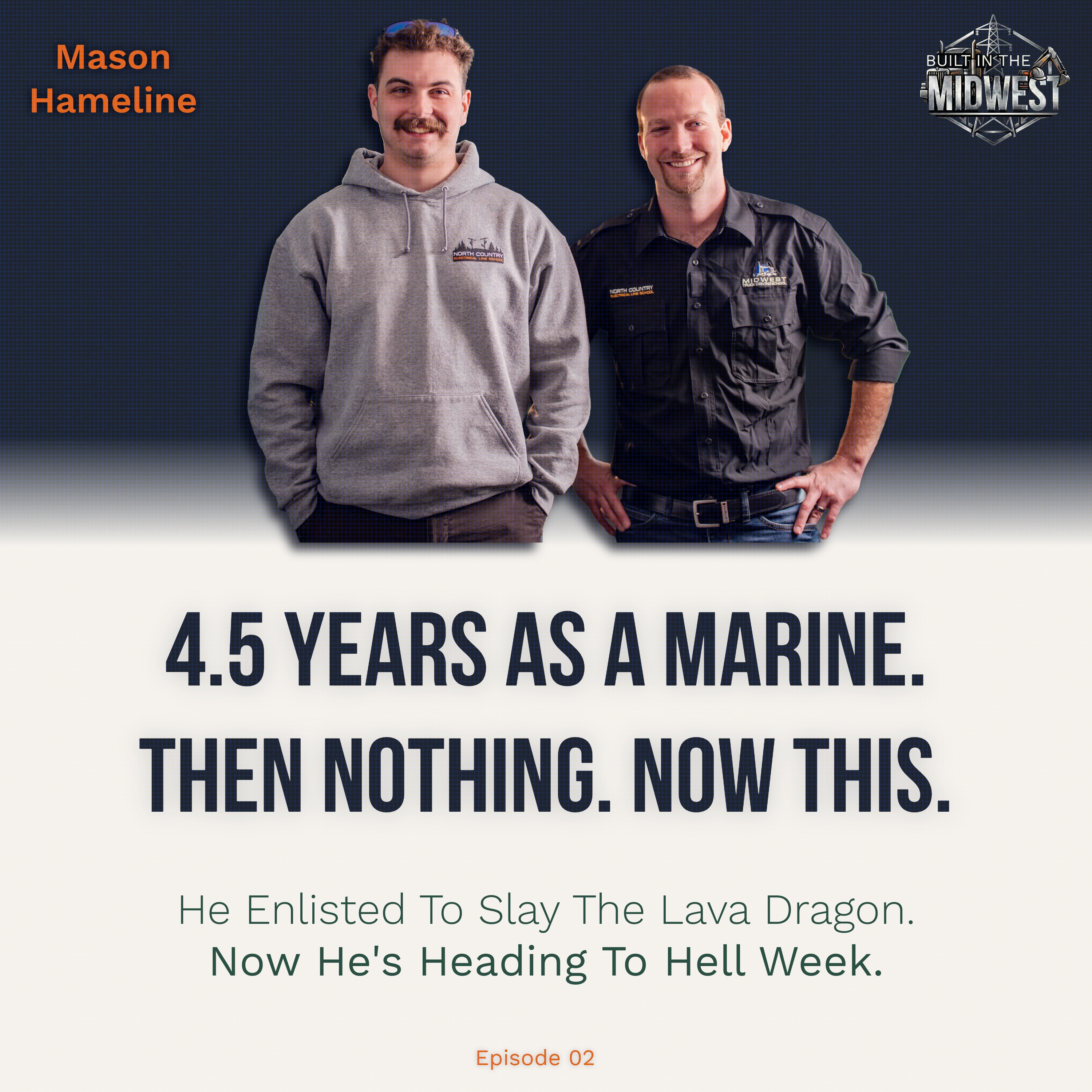
Join us as we dive into an engaging chat with Mason, who reveals his unexpected journey from military life to pursuing a career in the trades. He candidly shares how his decision to join the Marines at a young age sparked a series of life events, leading him to discover his true passion for hands-on work. Mason’s story is all about finding your niche and not being afraid to pivot when things don’t feel right—like when he realized that working behind a desk just wasn’t his jam. We also tackle the challenges veterans face when transitioning to civilian life, and Mason’s insights could be a game-changer for anyone feeling a bit lost after leaving the military. So, whether you’re contemplating a career shift or just curious about the trades, this episode is packed with relatable stories and valuable advice.
Transcript
When I had decided, like, I'm gonna go do this, starting the whole process, this, that, and the other, and they were furious.
Speaker A:But I just.
Speaker A:I hated that line of work.
Speaker A:Deployment came up, and the RO for weapons for the CAT platoon actually ended up going ua.
Speaker A:He just did not show up for the plane.
Speaker B:You know, if you could go back and do something differently, what would you.
Speaker A:I. I think that I. I would have jumped into this sooner.
Speaker B:If you're a career in the trades and you want to know what employers actually look for, what the work is really like, and what nobody tells you before you get started, you're in the right place.
Speaker B:Built in the Midwest features conversations that'll help you figure out if this path is for you.
Speaker B:Mason, I'd like to welcome you to the Built in the Midwest podcast.
Speaker B:Thanks for.
Speaker B:Thanks for joining me today.
Speaker A:Thanks for having me.
Speaker B:I really appreciate it.
Speaker B:I'll tell you what, I've got to know you really well over the last semester, and, you know, this.
Speaker B:What this is all about is kind of learning your story and how you got to be here, and, you know, you have a good story.
Speaker B:So I want you to kick us off right back to where you're from, where you grew up, and, you know, give me your story.
Speaker A:Yeah, I mean, I grew up in lower Michigan, bounced around Genesee county, lapeer, Flushing, now living in Lenin, which is just, you know, a little south of Flushing, north of Swartz Creek.
Speaker B:So you've stayed in the general area?
Speaker B:Yeah, for the most part.
Speaker A:Graduated from Flushing, left them.
Speaker A:Left here.
Speaker A:Joined the Marines at 18.
Speaker B:Okay, so were you still in high school when you decided on the Marines?
Speaker A:Oh, hell, I was in middle school.
Speaker B:Really?
Speaker A:Oh, yeah.
Speaker A:It was Marines or Army, really.
Speaker B:So you.
Speaker B:You already had that.
Speaker B:You were already ready.
Speaker B:Okay.
Speaker B:Where was your motivation to do that in.
Speaker B:In junior high?
Speaker B:I mean, that's.
Speaker B:I don't think in junior high.
Speaker B:I didn't.
Speaker B:I. I didn't.
Speaker B:I had no idea what I was going to do.
Speaker B:I don't think in high school I knew what I was going to do.
Speaker B:And in junior high, that's a big deal.
Speaker A:You know what it was?
Speaker A:I fell victim to the lava dragon commercial.
Speaker A:Man.
Speaker A:So we would go to my grandmother's, and she had these old VHS tapes.
Speaker B:Yeah.
Speaker A:And one of the commercials that was on the VHS tapes for, like, I don't know, Cinderella or some Disney movie.
Speaker B:Yeah.
Speaker A:Was the old school commercial of the Marine running the gauntlet.
Speaker A:It is a test not just of
Speaker B:strength, but of the power of the mind.
Speaker A:Gets to the End pulls the sword out, slays the lava dragon, you know, And I was, like, sitting here as a kid watching that, and I was like, yeah, I want to go kill a lava dragon.
Speaker B:I want to slay.
Speaker A:I want to slay the dragon.
Speaker B:Slay the dragon.
Speaker A:You know, and.
Speaker B:And we're talking about getting you all excited in that moment, and that obviously stuck with you.
Speaker B:All right, It's a big deal.
Speaker B:And that guy was all muscular, and just, you know, I was like, you know what?
Speaker B:That's what I want to be like now.
Speaker B:Did you have anybody in your family that was a Marine?
Speaker B:Did you have some influences there as well?
Speaker A:So my uncle was actually a White House Marine, so went through the Yankee White program, got stationed at Camp David, was a guard at the White House.
Speaker A:So growing up and hearing those stories, probably, yeah, absolutely.
Speaker B:Absolutely.
Speaker B:So, you know, especially having that military family around you.
Speaker B:I have many of my family in the military.
Speaker B:My grandpa's a World War II vet.
Speaker B:He lost two brothers in World War II.
Speaker B:It was just maybe all the horror stories that I've heard, maybe that was why that pushed me away.
Speaker B:But I'll tell you what I love my military friends.
Speaker B:Got a lot of them that were in different.
Speaker B:The different branches and stuff.
Speaker B:So a lot of, you know, your story is interesting because, you know, one, I don't know if I've talked to anybody that says, you know, they were dead set on the military in junior high, which is crazy.
Speaker B:So when did you sign up?
Speaker B:Were you still in high school at that point?
Speaker A:Yeah, so I was.
Speaker A:I went through the DEP program, which was like their delayed entry program.
Speaker B:The DEP program.
Speaker B:Okay.
Speaker B:I haven't heard of that.
Speaker A:I probably signed up for that at, like, 16 or 17.
Speaker A:And that was like, you know, you'd show up for workouts or whatever.
Speaker A:Guys would come back from boot camp, and they hang out with you and go through a couple workouts, and it was just getting you ready and physically fit.
Speaker B:So you actually got to do some of the military PT very beforehand.
Speaker B:But, yeah, yeah, I'll be darn.
Speaker B:Now, random question.
Speaker B:Is the seven core army values right the same in the Marines?
Speaker B:You know, so I had enough family members in the military, but correct me if I'm wrong, loyalty, duty, respect, selfless service, honor, integrity, personal courage.
Speaker A:It's something along those lines, something that we always got a good chuckle out of, was the Marines would love to tell you, honor, courage, commitment.
Speaker A:Marines don't lie, cheat, or steal.
Speaker A:That's a fucking lie.
Speaker A:Marines are some of the biggest liars.
Speaker A:They're cheating on everything.
Speaker A:If you're not cheating, you're not trying to.
Speaker A:There's only one thief in the Marine Corps.
Speaker A:The rest of us are just trying to get our shit back.
Speaker B:Interesting.
Speaker B:Interesting.
Speaker B:I like it.
Speaker B:And yet the personal courage.
Speaker B:You know, the Marines are the first ones to go.
Speaker B:They're the first ones to storm the beaches of Normandy and everything else.
Speaker B:So, you know.
Speaker B:Yeah, exactly.
Speaker B:So maybe there's some, you know, you're being modest.
Speaker A:You know, I mean, it's the tip of the spear.
Speaker B:Yeah.
Speaker A:And it's.
Speaker A:Marines don't do any of the whole Secret Squirrel.
Speaker A:You know, we're going to go in covertly and like, even marsoc.
Speaker A:MARSOC is a.
Speaker A:It's a sledgehammer.
Speaker B:Yeah.
Speaker A:Those guys just go in, and if it's breathing, it's.
Speaker A:It's dying.
Speaker B:Yeah.
Speaker A:So it's.
Speaker B:It's very apparent kind of where.
Speaker B:Where you guys are at that way.
Speaker B:So.
Speaker B:All right, so you're in high school, you joined the Marines.
Speaker B:Take me in that process.
Speaker B:Take me to boot camp.
Speaker B:How'd your family feel about it?
Speaker B:And was there ever a moment that you're like, this is not for me.
Speaker B:I made a mistake here.
Speaker A:I mean, you've got good days and bad days.
Speaker A:My mom, actually, my dad was still around when I had decided, I'm going to go do this.
Speaker A:Starting the whole process.
Speaker A:This, that, and the other.
Speaker A:And they were furious.
Speaker A:They did not want me to go at all.
Speaker A:They.
Speaker B:They didn't?
Speaker A:No.
Speaker A:You know, it's always kind of like, that's somebody else's job.
Speaker A:You know, I think a lot of people approach that where it's like, love the military, love the guys who served, but, like, I don't want my kids.
Speaker B:Support, support, support.
Speaker B:But not for my kid.
Speaker B:No, not right.
Speaker A:Yeah.
Speaker A:And so they were.
Speaker A:They were furious, and they kept trying to get me to not go, not go, not go.
Speaker A:Tried getting my mom at 17 to sign my papers so that I could leave at 17.
Speaker A:Wouldn't do it at 17, refused to do it.
Speaker B:That's like something out of a movie.
Speaker B:You don't see young guys that want to do that at 17.
Speaker A:So at 18, I remember I made.
Speaker A:She made me go and talk to all the recruiters, like, I won't do it, but I think if you're gonna do it, you should go and talk to everybody.
Speaker A:So I did.
Speaker A:Of course, the Air Force guy never opened his door.
Speaker A:Couldn't get a hold of him.
Speaker A:For the life of me.
Speaker B:No, no.
Speaker A:Talk to the army, talked to the Navy Navy offered me 40 grand.
Speaker A:I was like, ah, you know, I just don't want to do the Navy.
Speaker A:And yeah, I just, I really wanted to go to the Marines.
Speaker B:Yeah, absolutely.
Speaker B:If you're gonna do it, you're gonna go with the best branch that fits you.
Speaker B:Yeah.
Speaker B:You know, because, I mean, every, every branch is very different in their own regard, but, you know, all service people that, you know, support our country, you know, makes a difference.
Speaker B:All right, so take me to boot camp.
Speaker B:Where did you go to boot camp at?
Speaker A:So I went to Parris Island, Paris.
Speaker A:Okay, so they divide the country up.
Speaker A:You're east of the Mississippi, you're going to Parris Island.
Speaker A:West, you're going to San Diego.
Speaker B:Yep.
Speaker A:Yeah, that was, it was like 14 weeks, something like that.
Speaker A:Get there the first 24 hours all in processing.
Speaker A:You don't get any sleep.
Speaker A:No, you don't get any sleep.
Speaker A:You're running around, getting screamed at.
Speaker A:I remember the, the yellow footprints and the silver hatches.
Speaker A:You know, you walk through them and now you're a recruit starting your journey.
Speaker A:And looking back, it was probably meant to be this big, awe inspiring moment, but I was so terrified that I just like, was trying to keep my head down and just get through it.
Speaker B:Everything you had just to get through it.
Speaker B:You couldn't take in the moment at all.
Speaker B:Not when you're in the middle of it.
Speaker B:No.
Speaker B:You just can't.
Speaker A:But I mean, that was easy, dude.
Speaker B:Yeah.
Speaker A:Like anybody, it was easy.
Speaker A:Oh, yeah, it was easy.
Speaker A:I turned my brain off for 14 days.
Speaker A:They tell you what to do, when to do it, you know, eat, sleep, repeat.
Speaker B:Now, there would be some disagreement amongst other Marines.
Speaker B:I know that said that was easy.
Speaker B:All right.
Speaker B:When they don't have you, like, the one was saying he didn't eat for like three days or something and, and they give you an apple and he said they ate the whole core and the seeds and the stem.
Speaker B:Was that, is that, is that true?
Speaker A:That's a real thing?
Speaker B:That's a real thing.
Speaker B:Okay.
Speaker A:Sitting there and they give you these like box chows or like sack nasties, little pre made sandwich, some eggs and.
Speaker A:Yeah, like a fruit of some kind.
Speaker B:And you just.
Speaker B:Oh my God.
Speaker A:Just going.
Speaker B:After three days, you're just.
Speaker B:Your belly's rumbling and you can't.
Speaker B:So.
Speaker B:Oh, you know.
Speaker B:And apparently those three day fasts are good for you too.
Speaker B:Right?
Speaker B:So.
Speaker B:Yeah.
Speaker B:So I don't know if you remember.
Speaker B:You remember that, but it is interesting because at the same time you say, okay, turn your brain off and everything else but there was.
Speaker B:I'm sure there was numerous people that didn't make it through boot camp.
Speaker A:Onesies and twosies.
Speaker B:Yeah.
Speaker A:But, I mean, it really is just like, don't quit.
Speaker B:Yeah.
Speaker A:Like, if you drown in the pool, right?
Speaker A:If you cannot swim, they're still gonna pass you.
Speaker A:But the moment you get out of the pool and go, I'm done.
Speaker B:Yeah.
Speaker A:Okay.
Speaker B:Well, yeah, interesting.
Speaker A:We're gonna go stick you over here with the broken ones, and you're gonna hang out for the next two months while we process your paperwork.
Speaker A:Like, really?
Speaker A:The fastest way.
Speaker B:They'll still kind of move you along, though.
Speaker A:The fastest way to leave boot camp or Parris island or whatever is to just graduate.
Speaker A:Just do it.
Speaker A:Because at the moment, you throw your hands up and say, I quit.
Speaker A:Like, okay, well, we're gonna put you on the back burner and forget about you.
Speaker B:Okay?
Speaker B:So the best way is actually to get through it and, like, you know what?
Speaker B:Do everything that you can.
Speaker B:All right?
Speaker B:Do whatever you can to get through it and make it happen.
Speaker B:And, yeah, 14 weeks.
Speaker B:That's not like.
Speaker B:It's just a couple weeks.
Speaker B:I mean, that's a long time to get through it.
Speaker B:So.
Speaker B:All right.
Speaker B:So after that,
Speaker A:Following boot camp, I went to 29 palms.
Speaker A:Actually, that's not true.
Speaker A:I went through MCT and all that good jazz.
Speaker A:But once I began my pipeline, I ended up in 29 palms at the comm school out there.
Speaker A:That was another 15ish weeks.
Speaker B:Oh, really?
Speaker B:And that was for comm school?
Speaker B:Yeah.
Speaker B:Okay.
Speaker A:For communications?
Speaker B:Yeah.
Speaker A:Went through there.
Speaker A:That was something.
Speaker A:Living in the desert for, you know, 15 weeks.
Speaker B:Yeah.
Speaker B:You're not kidding.
Speaker A:Feel bad for those poor guys that get stationed there, but went through that.
Speaker A:At the end of that, I got assigned to 1 5.
Speaker B:So.
Speaker A:Went there.
Speaker A:Spent my first maybe three or four months in the shop.
Speaker A:Brand new boot.
Speaker A:So, I mean, I'm doing SL3 layouts and paperwork, and I just running around, not really sure what to do.
Speaker A:But I was miserable.
Speaker A:I hated it.
Speaker A:Oh.
Speaker A:Hated being in the shop.
Speaker B:Now, where were you stationed at this time?
Speaker A:So 15 is stationed out in San Clemente, California.
Speaker B:Okay, gotcha.
Speaker A:So I'm Camp Pendleton out there.
Speaker B:Ah, yes.
Speaker A:But I just.
Speaker A:I hated that line of work.
Speaker A:And deployment came up, and the RO for weapons for the CAT platoon actually ended up going ua.
Speaker A:He just did not show up for the plane.
Speaker B:What?
Speaker A:Yeah.
Speaker A:So I land.
Speaker B:That's.
Speaker B:That's kind of a big deal.
Speaker A:That's a little bit.
Speaker B:Yeah, that's.
Speaker B:That's.
Speaker B:That's not Something you do.
Speaker A:So I land in Japan on our first deployment, and as I'm turning my rifle into the armory, my staff sergeant comes up and is like, hey, by the way, you're going to weapons company.
Speaker A:I was like, what do you mean?
Speaker A:Like, I'm what?
Speaker A:He's like, yeah, like the arrow didn't show up.
Speaker A:So, wow, you're going.
Speaker A:I was like, oh, okay, there you go.
Speaker B:Take your stuff over there now.
Speaker A:But that's the funny part is, so I end up taking all my stuff over and I'm meeting the guys who I'm going to be.
Speaker A:Be kind of going through it with, and I love it.
Speaker A:Just grunts, dude.
Speaker B:Yeah.
Speaker A:And that's like.
Speaker A:That was me kind of finding myself as I go out.
Speaker A:Very first day I go out drinking with these guys.
Speaker A:It's kind of like an icebreaker.
Speaker A:And I just.
Speaker A:It's instant.
Speaker A:I just.
Speaker A:I loved it.
Speaker A:Yeah.
Speaker B:What a stark difference from where.
Speaker B:What you hated kind of beforehand.
Speaker B:But, you know, I saw something a little while back.
Speaker B:It said, the sweet isn't so sweet without the bitter.
Speaker B:Right.
Speaker B:So sometimes you gotta have those lows to appreciate.
Speaker A:I mean, I went.
Speaker A:I went from riding a desk and doing paperwork to shooting machine guns and missiles.
Speaker B:Exactly.
Speaker B:So you found your niche, you found your interest.
Speaker B:And so you know what.
Speaker B:And that's part of life where you try different things until you like something and that's what you want to do.
Speaker B:So how long were you in the military after that?
Speaker A:I mean, my full time was about four and a half years.
Speaker B:Okay, four and a half years.
Speaker B:And then did you ever think about, you know, because I see a lot of people that.
Speaker B:Four, four and a half years, that's it.
Speaker B:And then they're out.
Speaker B:Did you ever think about doing the full 20 and retiring?
Speaker A:I did.
Speaker A:Like I did for sure.
Speaker A:There was.
Speaker A:Especially towards the end there, I ended up meeting this girl and, you know, like you said, tends to change things, so.
Speaker B:It does.
Speaker A:I was thinking about it, but, you know, I had.
Speaker A:I had reached the end of what it was that I was going to be able to do in the sense of they were going to pull me out of the company, they were going to put me back in headquarters.
Speaker A:I was going to be riding another desk and I was going to be running a shop, which is just not what I.
Speaker B:And that wasn't you.
Speaker B:That wasn't.
Speaker B:That wasn't what you wanted.
Speaker A:That's not what I wanted to do.
Speaker A:So I had reached my climax and I was done.
Speaker B:So at that point, you knew it's like, all right, this has been an amazing experience.
Speaker B:This was great.
Speaker B:I met some lifelong friends in this, but at the same time, this is.
Speaker B:This is the end of the story for my military kind of career.
Speaker B:So when.
Speaker B:When in that.
Speaker B:So I'm thinking about the.
Speaker B:The change, the transition here.
Speaker B:Why line work?
Speaker A:You know, I had kind of stumbled upon it.
Speaker A:I had wanted to do something with my hands.
Speaker A:I needed.
Speaker A:I need to be able to do something with my hands.
Speaker A:If I sit behind a computer, do
Speaker B:paperwork, it's like, no, I can't.
Speaker B:I can't do that.
Speaker B:Yeah.
Speaker B:So you want to get down.
Speaker B:Well, especially with what you did in the military.
Speaker B:I like getting down and dirty.
Speaker B:Yeah.
Speaker B:Get me right in there.
Speaker B:I want to be front and center.
Speaker B:You know what?
Speaker A:So I kind of knew that I wanted to do some blue collar stuff, but I didn't really know what.
Speaker A:And I don't even know how I stumbled upon it.
Speaker A:I just did.
Speaker B:Was it the danger aspect of things?
Speaker B:When you think about it, it's one of the most dangerous.
Speaker B:You know what's a really good incentive
Speaker A:was I found out that Journeyman Linemen make $55 an hour, roughly.
Speaker A:And then they work overtime.
Speaker A:They chase storms.
Speaker B:So do doctors.
Speaker B:I mean, doctors make a lot, too.
Speaker B:You know,
Speaker A:I don't have the member to be a porn star, and I don't have the brain to be a doctor.
Speaker A:So line work it is.
Speaker A:All right.
Speaker A:All right.
Speaker B:And I don't have 12 years to be a doctor.
Speaker A:You know, I want to go to school.
Speaker B:No, exactly.
Speaker A:Yeah.
Speaker A:I just kind of stumbled into it and I tried doing, you know, we talked about it.
Speaker A:I tried doing Lansing's program.
Speaker B:Yep.
Speaker A:And Lansing is 13 months long.
Speaker A:You don't get a CDL at the end of it.
Speaker B:And which, knowing what you know now, and you know, I'm not gonna talk bad about any programs, but to me, I can do it for you.
Speaker B:I know you will.
Speaker B:But to me, it's frustrating because, like, you know, setting you up for success.
Speaker B:Right.
Speaker B:Is advantageous to the school.
Speaker B:Right.
Speaker B:And, like.
Speaker B:And, you know, you can apply for Movali or LBAT without a cdl.
Speaker B:Not only is that important, it's.
Speaker B:It's really.
Speaker B:And that's.
Speaker B:That's why it's the first thing that we do.
Speaker B:You know what I mean?
Speaker B:So tell me about, just maybe quickly, briefly about that experience.
Speaker B:And was that.
Speaker B:I mean, not only was that frustrating for you, but talk about that, and did that actually make you maybe not want to go into this trade potentially?
Speaker A:It was.
Speaker A:It was definitely A hiccup for sure, you know, And I was sitting there and I'm learning what a capacitor does on a subatomic level.
Speaker A:Like, I'm learning.
Speaker B:Yeah.
Speaker A:Ohm's Law.
Speaker A:And I'm taking like college engineering level math.
Speaker A:And it's like, this isn't, this isn't even what I'd be doing.
Speaker B:No, like, no.
Speaker A:Not to mention the first three years might.
Speaker A:I'm going to be working a shovel.
Speaker A:Right.
Speaker A:Like, let's not care.
Speaker B:And that's not line work.
Speaker B:Electrical engineering is not line work.
Speaker B:You want to learn that?
Speaker B:None of that is line work.
Speaker B:And all that theory, that's not line work.
Speaker B:And to me it reminds me of when I, when I went for my bachelor's degree and I wanted strictly business.
Speaker B:I liked business.
Speaker B:I liked accounting.
Speaker B:I liked that.
Speaker B:And then they said, hey, well, you got to, you got to dissect a pig, by the way.
Speaker B:And I was like, I don't want to dissect a pig.
Speaker B:Well, you need biology and you need this lab.
Speaker B:And I'm like, but why?
Speaker B:This is not important.
Speaker B:This does nothing for me.
Speaker B:Right, and so you felt that way.
Speaker B:I did first hand.
Speaker B:I did.
Speaker A:And you know, I remember I was sitting in math, I was sitting in my electrical engineering math class and I was looking for CDL schools because I Lansing wasn't going to provide it.
Speaker B:No.
Speaker A:And they were like, hey, it's on you.
Speaker A:Like, figure it out.
Speaker A:And I happened to find you guys.
Speaker A:I called you and I was like, I need this, that and the other, like, do you guys accept the GI Bill?
Speaker A:And da, da, da, da.
Speaker A:And I think it was either you or your brother.
Speaker A:It was, you know, hey, man, like, you know, we got a line school.
Speaker B:I know I had talked to you once and I think Kyle did to talk to you once too.
Speaker B:So yeah, he's like, you know, we
Speaker A:got a line school, right?
Speaker A:I was like, well, I'm in line.
Speaker B:I'm in my school.
Speaker B:Yeah.
Speaker A:Well, how long is it?
Speaker A:Well, it's 13 months.
Speaker A:Ours is 12 weeks.
Speaker A:Yeah, like why don't you.
Speaker A:It was like, yeah, why not?
Speaker A:I came up here and the rest is history.
Speaker B:Exactly.
Speaker B:Well, and that's.
Speaker B:And that's where.
Speaker B:And that's where I think the school does a really good job setting you guys up for success with everything you need to be successful and none of the garbage, none of the fluff, none of the extra stuff.
Speaker B:And that's why.
Speaker B:And I know even some of the guys in your class, you know, and you heard that the first Month where I, you know, I don't want to do this cd.
Speaker B:I want to get out climbing.
Speaker B:I want to do the.
Speaker B:And I was like, I get that.
Speaker B:I agree with you guys, but guess what?
Speaker B:You can't apply for Mo Valley or Elbat without that cdl.
Speaker B:I was like, I know you want to get to the fun stuff, but this is just.
Speaker B:Trust us, because we know this program was built by five journeymen, IBEW linemen, so they know what they're doing.
Speaker B:All right?
Speaker B:So that's an important part of.
Speaker B:That's why that CDL is first.
Speaker B:And then you get in all.
Speaker B:It says the lineman stuff and everything else.
Speaker B:You seem to have that pattern.
Speaker B:Like you do something and then you end up just.
Speaker B:It just not.
Speaker B:It just.
Speaker B:It's not what you like.
Speaker B:It doesn't end up working out.
Speaker B:But then you come out smelling like a rose and you find exactly what you like.
Speaker B:And.
Speaker B:And you're.
Speaker B:You're right.
Speaker B:Niche, which is wild.
Speaker A:I mean, that's life.
Speaker B:Yeah.
Speaker B:Yeah.
Speaker A:Don't like what you're doing?
Speaker B:No.
Speaker B:Change it.
Speaker B:Exactly.
Speaker B:Exactly.
Speaker B:And maybe that's kind of the more the story here for maybe other people that are in positions that they don't like, and maybe they're transitioning out of the military.
Speaker B:I mean, we work with a lot of veterans, and, you know, that's one thing I see with a lot of veterans is when they're getting out of the military, they just don't know what to do and they're just lost.
Speaker B:And I know one of my good friends was lost for a couple years because he's like, you know what?
Speaker B:Every day was so regimented, and I was told where to go, what to do, and everything was boom, boom, boom.
Speaker B:How was that for you?
Speaker B:What's your advice to other.
Speaker B:Other veterans?
Speaker B:Because you seem to be really composed with that.
Speaker B:Or maybe it was really hard for you.
Speaker A:Yeah.
Speaker A:I mean, it.
Speaker A:It.
Speaker A:So I did the classic, you know, I got out in December, and I took basically from December to march off.
Speaker A:Like, I was like, I'd spent the last four, four and a half years in the military.
Speaker A:I was getting out of a really kind of awkward relationship.
Speaker B:Yeah.
Speaker A:And it was just.
Speaker A:I kind of throw my hands up and it's like, I'm going to take this time for me.
Speaker A:So I traveled a little bit, bounced back and forth between California and Michigan a couple of times and just kind of lived it up.
Speaker A:But it.
Speaker A:I see how dudes fall into that.
Speaker A:That pit trap where it is you go from being regimented and having A schedule and all these dudes that you can rely on that you trust, and this, that, and the other to having nobody.
Speaker A:You're on your own.
Speaker B:You're on your own.
Speaker A:Figure it out.
Speaker B:And you see how many people fall into, like, depression and everything, because all of a sudden they just don't have anybody and they're not being motivated or being pushed on a daily basis.
Speaker B:And it's just all of a sudden they're just done, just like that, you know, and it's so difficult.
Speaker B:So what advice would you give?
Speaker B:Would that be your advice is to take.
Speaker B:Take the time for yourself, find out who you are?
Speaker A:No, I don't think so.
Speaker A:I don't think that worked for you.
Speaker A:I think.
Speaker A:Well, it was more.
Speaker A:So I lived like a pack rat when I was in the military.
Speaker A:So I got out with a very decently sized nest egg.
Speaker B:Okay.
Speaker A:And that's what allowed me to take that time.
Speaker A:I know a lot of dudes who were doing paycheck to paycheck.
Speaker B:A lot of guys that.
Speaker B:That we work with.
Speaker B:Yeah.
Speaker B:They don't.
Speaker B:They don't have anything.
Speaker A:Yeah.
Speaker B:They have nothing.
Speaker A:Yeah.
Speaker A:So that's not easy for everybody to do.
Speaker B:Yeah.
Speaker B:So you kind of set yourself up a little bit more for success.
Speaker A:I did, but I was also lucky enough that I had, you know, a nice family to come back to.
Speaker B:Yeah.
Speaker A:A lot of guys, especially in the Marines, don't.
Speaker B:Okay.
Speaker A:You know, it was more common than not to find dudes in the military who were running from something.
Speaker B:And that's why they were there.
Speaker B:Yeah.
Speaker B:That's why they're.
Speaker A:Because they.
Speaker B:They wanted to get away from their hometown.
Speaker B:They wanted to get away from where they grew up.
Speaker B:So they didn't.
Speaker B:They didn't have that village around them.
Speaker A:So I was incredibly lucky.
Speaker B:Yeah.
Speaker A:And I couldn't tell you, man.
Speaker A:I'd say just have a plan.
Speaker B:Yeah.
Speaker A:If you like.
Speaker A:I knew I was getting out.
Speaker A:I knew that I was getting out.
Speaker B:Start planning.
Speaker A:Start planning.
Speaker B:Start planning now.
Speaker B:You know, it's interesting you say that, because we have worked with numerous veterans, and this has been relatively recent over the last year and a half, two years.
Speaker B:But I've been here eight years, and this didn't happen eight years ago or even five years ago.
Speaker B:But over the last couple years, there's been a lot of veterans that are still in the military.
Speaker B:But the last six months, they've come through line.
Speaker B:Score.
Speaker B:They've come got their CDL or they've come got their operator license, and they're still.
Speaker B:There's Still.
Speaker B:So I think the military is recognizing that this is kind of a problem.
Speaker B:And we can't just leave these guys out to dry after we're done with them, but to help them transition to civilian life.
Speaker B:And so I've seen that, and that seems to be really, really great.
Speaker B:I mean, the one was stationed in.
Speaker B:It was like, north or South Carolina.
Speaker B:Is there a base right there?
Speaker A:Yeah.
Speaker B:Yeah.
Speaker B:So he was in the Carolinas.
Speaker B:One of them.
Speaker B:But anyway, so he was in the last six months and literally came through line school, got everything.
Speaker B:He was still in the military, but transition.
Speaker B:And so maybe the military is recognizing that there is a problem there and that we gotta help with this, because if you're told what to do, where to go, where to eat, where to sleep for four years, that's gonna be patterned in your mind.
Speaker B:I mean.
Speaker B:I mean, they say anything you do for, like, 21 days becomes a habit.
Speaker B:I mean, about.
Speaker B:For four years.
Speaker B:And then, like you said, it's just a snap of a finger.
Speaker B:And it's a huge.
Speaker B:It's a huge change.
Speaker B:If you could go back, what would you do differently
Speaker A:from the school?
Speaker B:Was that from the school's perspective, maybe military perspective?
Speaker B:You know, looking back, I know some of my Marine friends, they say no regrets, but, you know, you know, if you could go back and do something differently, what would you.
Speaker A:I think that I. I would have jumped into this sooner than I did.
Speaker B:Okay.
Speaker A:So I got ahold of you guys, and what, maybe June or July.
Speaker A:I was still going through Lansing's program trying to get that switch.
Speaker A:And you.
Speaker B:You were out of the military for a while at that point?
Speaker A:Yeah, at that point it was, you know, maybe, what, seven months.
Speaker B:Yeah.
Speaker A:Seven, eight months.
Speaker B:Yeah.
Speaker A:So first three months, I took off in March.
Speaker A:I started working in March doing landscaping, and I didn't get out of landscaping and all that until, like, September.
Speaker A:So I was going to school and working and trying to figure out what I was gonna do, and it was just.
Speaker A:I should have just.
Speaker A:In March, I should have just came
Speaker B:up here, just dove right in.
Speaker B:You know, don't dip your toe in.
Speaker B:Just dive right in.
Speaker B:You know, he who hesitates is lost kind of thing.
Speaker B:But don't hesitate.
Speaker B:Just do it.
Speaker B:Just do it.
Speaker A:I. I work best with kind of my nose to the grindstone.
Speaker B:Yep.
Speaker A:Right.
Speaker A:Like when you don't have any other option but to figure it out, it's a really good incentive.
Speaker B:Yeah, absolutely.
Speaker A:Sink or swim, what are you gonna do?
Speaker B:Yeah, no, it's interesting because, you know, and even with knowing this is what you wanted to do.
Speaker B:You were at Lansing, but you knew it wasn't exactly what you needed.
Speaker B:And even that program, you knew, and you knew relatively early on, like, this isn't gonna set me up for success.
Speaker B:And so there was something there.
Speaker B:What was that moment that you're like, this.
Speaker B:This is not part of the plan.
Speaker B:Like, this is not.
Speaker B:This isn't going to be able to help me reach my goals.
Speaker A:I think it was, it was honestly the cdo.
Speaker B:Yeah.
Speaker A:Getting on the phone with you guys and.
Speaker A:Because I was already hemming and ha.
Speaker A:You know, and like I said, I'm sitting in a electrical engineering class or I'm reading blueprints like there's no point in doing it.
Speaker A:And it was.
Speaker A:It was pissing me off and it was pissing some of the other guys off.
Speaker B:Unnecessary electives.
Speaker A:Yeah.
Speaker A:And, you know, now here it is, I'm taking time off of work to go to a class that is 13 months long that I.
Speaker A:And things were just piling.
Speaker A:And it was, it was, it was getting on the phone with you guys and being like, hey, we have it cool.
Speaker B:Yeah, going you and that.
Speaker B:That made a big difference.
Speaker B:Yeah, yeah, yeah.
Speaker B:And then, you know, your honest, Your honest opinion with, with.
Speaker B:With the course, from starting with your CDL to the whole program especially, you have interesting knowledge because you've.
Speaker B:You've been to another line school, essentially.
Speaker B:You know what I mean?
Speaker B:What's.
Speaker B:What was your opinion of it?
Speaker B:Honest?
Speaker A:I mean, I liked it.
Speaker A:I. I didn't.
Speaker A:I liked it a lot.
Speaker A:Instructors are all good.
Speaker A:Like, CDL guys are all good.
Speaker A:Everybody kind of smokes and jokes with everybody.
Speaker B:Well, I feel like you could have fun with anybody.
Speaker B:Like, you joke around with it.
Speaker B:I mean, you're.
Speaker B:But you always got a smile on.
Speaker B:You're always enjoying yourself.
Speaker B:I mean, you really.
Speaker A:You really are not talking about the same person right now.
Speaker B:I don't know.
Speaker B:I've got to.
Speaker B:I've.
Speaker B:We've.
Speaker B:I've got to know you pretty well the last several months.
Speaker B:So, I mean, you guys are.
Speaker A:No, you guys are just.
Speaker A:You guys are good people.
Speaker A:It's.
Speaker A:It's easy to, you know, be at the secretaries instructors.
Speaker A:Kyle.
Speaker A:Oh, of course.
Speaker A:We're not gonna go there.
Speaker B:Good stuff.
Speaker B:Well, you know what?
Speaker B:It really has been a pleasure having you.
Speaker B:And I'm not just saying that.
Speaker B:Like, it's been fantastic.
Speaker B:And I really enjoyed just stopping by and hanging out.
Speaker B:And, you know, I'm gonna miss you around the school.
Speaker B:So you know what?
Speaker B:You can hang out for as long as you'd like.
Speaker B:All right.
Speaker B:And you're always welcome to come back and visit and, you know, and so just.
Speaker B:I'm curious now.
Speaker B:Where do you see yourself in five years from here?
Speaker B:What's your goal here?
Speaker A:So, I mean, I obviously did my aptitude and interview through Mo Valley, got the.
Speaker A:My ranking, which was.
Speaker B:Yeah, so we didn't even talk about that, which is.
Speaker B:Okay, so you passed all that.
Speaker B:You got your ranking.
Speaker B:What was your ranking again?
Speaker A:14.
Speaker B:Okay.
Speaker B:Which is.
Speaker B:Which is phenomenal.
Speaker A:Out of.
Speaker A:Yeah.
Speaker A:I don't know how many.
Speaker A:Hundreds of people.
Speaker B:Out of hundreds.
Speaker B:Hundreds of people.
Speaker B:You were 14.
Speaker B:So for sure, you're gonna be getting a call in the next one to six weeks about going to Hell Week.
Speaker B:How do you feel about that?
Speaker A:I'm ecstatic.
Speaker B:Yeah.
Speaker A:Like, this is what I wanted to do.
Speaker A:This is where I want to be.
Speaker A:And I can't wait to go through that and see what.
Speaker B:You're gonna love it.
Speaker B:You're gonna love it because it's.
Speaker A:I really hope so.
Speaker B:You know, and everything that you did over there from the Bryson bit and all, you're gonna have to do that down there.
Speaker B:And that's why that is set up.
Speaker B:And some of the guys were talking about, like, why make the hand drill through?
Speaker B:Because guess what?
Speaker B:You get into Hell Week, when you get into Hell Week, you're gonna have to be doing this stuff.
Speaker B:And, you know, digging a six and a half foot hole, like, this is just dumb.
Speaker B:It is dumb, but you gotta.
Speaker B:You gotta do it.
Speaker B:And so, you know what if we don't kind of prepare you guys for that, right?
Speaker B:And have you practice that, as dumb as it may be, you know what?
Speaker B:You gotta practice that because it's three strikes, you're out at hell.
Speaker B:So you gotta be there, plain and simple.
Speaker B:You gotta be prepared for it.
Speaker B:So that's huge.
Speaker B:Well, I look forward to keeping in touch with you because like I said, just from having done this for a couple years now with the line guys, you're gonna be in a call in the next week to six weeks without fail.
Speaker B:And then typically, they don't give you much time either.
Speaker B:They're like, okay, be here on Monday for Hell Week.
Speaker B:So, boom, kind of like the Marines that way.
Speaker B:Boot camp.
Speaker B:Boom.
Speaker B:This is what we gotta do.
Speaker B:This is what we're doing.
Speaker B:And then, you know, being able to get right, right into this career, looking at maybe, maybe two, three years down the line, five years, 10 years.
Speaker B:Where do you.
Speaker B:Where do you see yourself?
Speaker B:Do you still see yourself in this trade?
Speaker A:You know, I Mean, we'll, we'll cross that bridge when we get there.
Speaker B:Yeah, obviously, it's a long, it's a long time.
Speaker A:Yeah.
Speaker A:I mean, it takes, what, four, four and a half years to take?
Speaker B:It could be as soon as three years, as long as five years.
Speaker B:It depends on how.
Speaker B:It's all hourly based, so it depends on how many hours you work.
Speaker B:You know, guys can knock it out in three, three and a half, four years, though.
Speaker B:So.
Speaker A:Yeah.
Speaker A:So, I mean, hopefully.
Speaker A:Right.
Speaker A:Top out, become a journeyman.
Speaker A:I still love the idea of being in the trenches.
Speaker B:Yep.
Speaker A:So I, I want to chase storms.
Speaker A:I want to get down and dirty.
Speaker A:I want to do, you know, I, this is what I want to do.
Speaker A:So we'll see what happens.
Speaker B:No, I love it.
Speaker B:And that's, and that's where there's always going to be opportunities for guys like yourself, because guess what?
Speaker B:Like, hurricane season comes every year.
Speaker B:You know, every year.
Speaker B:I know I have some lineman friends that they just look forward to hurricane season.
Speaker A:Like, here we go.
Speaker B:You know what, it's going to hit Florida or the Gulf or Texas or the Carolinas.
Speaker B:It hits every year.
Speaker B:There's hurricanes and so, and guys go down there and it's just, it's just dumb what they can make.
Speaker B:And I mean, I know a handful that that's all they do is go down there for storms, and then they just essentially do whatever the rest of the year.
Speaker A:So, I mean, it would be awesome to be able to work nine months out of the year and the moment it gets cold, just.
Speaker B:Yeah, exactly.
Speaker A:You guys, in three months.
Speaker B:Yep, exactly.
Speaker B:I'm gonna.
Speaker B:Well, yeah, exactly.
Speaker B:It's nice and warm down there.
Speaker B:It's gorgeous.
Speaker B:Like, I know I'm, I'm out of here, so.
Speaker B:No, I, I, I love it.
Speaker B:I love it.
Speaker B:Well, I don't want to take up any more of your time.
Speaker B:Mason, I just want to say thank you again.
Speaker B:It's been a pleasure having you and appreciate you being on the podcast and, you know, talking about, talking to the younger generation and everybody, for that matter, about your experience and your story.
Speaker B:It truly is an amazing story, and I appreciate you sharing it with everybody.
Speaker A:No worries.
Speaker A:Thanks for having me.
Speaker B:Thank you very much, sir.