


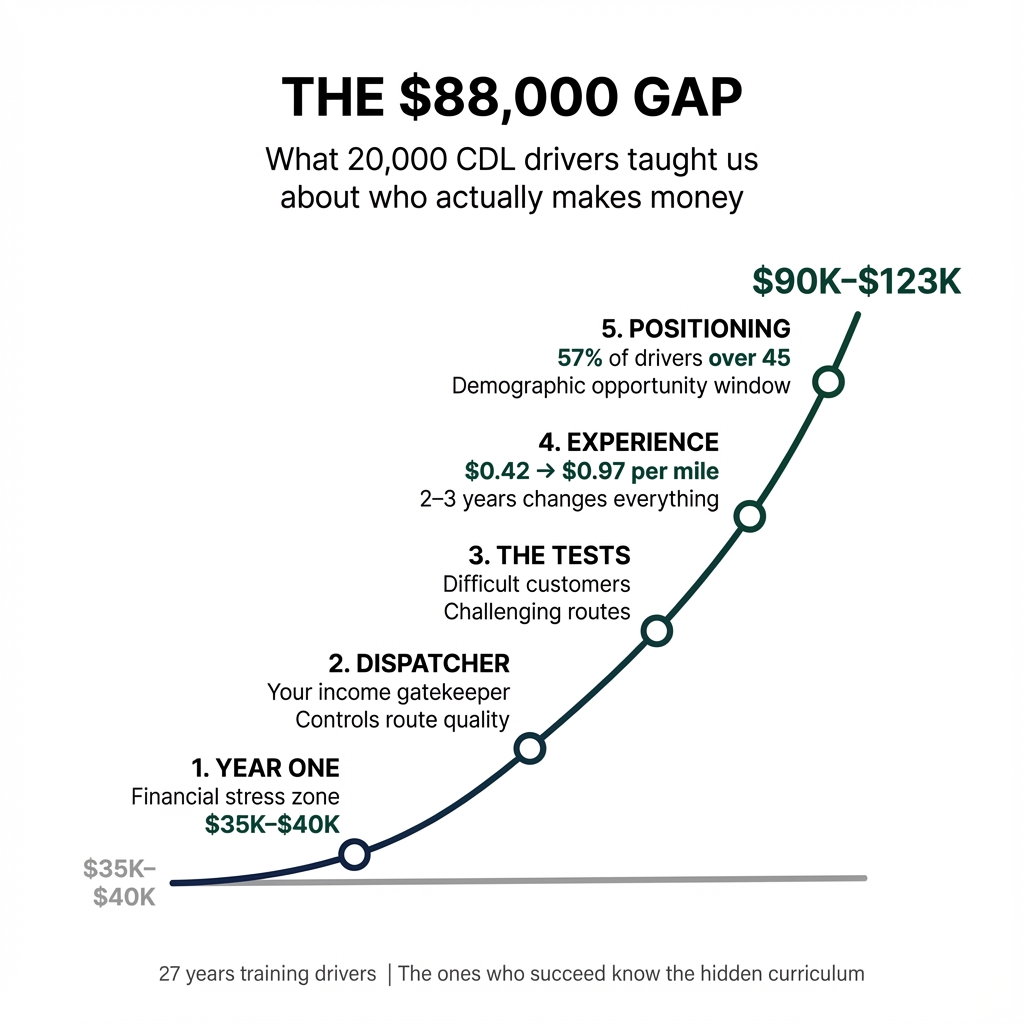
TL;DR: Your first year as a truck driver involves more than driving skills. Success depends on understanding unwritten industry rules, building strong dispatcher relationships, surviving financial pressure, and passing employer tests. Year one earnings average $35,000 to $40,000, but experienced drivers earn $90,000 to $123,000 by learning how the system works.
Core insights:
-
New drivers earn $35,000 to $40,000 in year one, with unpaid waiting time at loading docks reducing effective hourly wages
-
Your dispatcher relationship determines which loads you get and controls your earning potential more than driving ability
-
Employers test new drivers with difficult assignments to evaluate reliability and professionalism
-
Experience increases pay from $0.30-$0.42 per mile to $0.82-$0.97 per mile within two years
-
Financial stress during year one directly correlates with increased accident rates and safety problems
We’ve trained over 20,000 drivers over 27 years. The ones who succeed long-term know something the others don’t.
Your backing skills won’t make or break your career. Neither will a perfect pre-trip inspection.
The drivers who build six-figure careers understand the hidden curriculum. They know the unwritten rules. They navigate the political dynamics that determine who gets good routes and who stays trapped earning entry-level wages.
Here’s what happens after you get your CDL.
What Is the Financial Reality of Year One Truck Driving?
New drivers earn $35,000 to $40,000 in year one. Some companies advertise higher numbers, but those figures assume you run maximum miles with zero delays.
The problem shows up in what they don’t pay you for.
You sit at loading docks for hours. The company doesn’t compensate you for this waiting time. Your per-mile rate looks good on paper, but when you calculate hours worked, the math changes.
For some drivers, training costs get deducted from paychecks for the first year or two. You’re paying to work while earning entry-level wages.
Financial stress creates safety risks. University of Pittsburgh researchers found that drivers worried about money have more preventable accidents.[1] Financial precarity costs companies over $1.3 million per year in additional expenses.[1] One in five adults report forgetfulness when stressed. Seventeen percent struggle with decision-making.[2]
These numbers matter when you’re operating an 80,000-pound vehicle.
Bottom line: Year one financial pressure affects both your bank account and your safety record. Understanding this helps you prepare mentally and financially.
How Does Your Dispatcher Control Your Income?
No one influences your success more than your dispatcher.
They decide which loads you get. They advocate for you with management. They make your life easier or harder through the assignments they give you.
New drivers don’t realize this relationship determines earning potential more than driving skills.
Drivers who build strong dispatcher relationships get scheduled for higher mileage deliveries. They receive better routes. They get called first when premium loads become available.
Your dispatcher handles multiple drivers, customers, shippers, and receivers. They coordinate complex logistics while keeping everyone satisfied. Understanding this helps you position yourself strategically.
When dispatchers know you handle challenges well, they work with you long-term. They prioritize you for better-paying loads. They advocate for you with decision-makers.
Communication skills matter more than driving ability in this relationship. We’ve seen a decline in basic communication ability compared to a few years ago. The drivers who communicate professionally stand out immediately.
The takeaway: Your dispatcher relationship determines your income trajectory. Treat this relationship as professionally as you treat your driving responsibilities.
What Are the First Year Tests Employers Use?
Your employer tests you.
They send you to difficult customers. They assign you to regions with challenging roads. You get stuck with undesirable loads.
This isn’t random. They’re evaluating whether you handle adversity.
Drivers who demonstrate reliability and professionalism during these tests get better treatment. Log miles without incidents. Make timely deliveries. Show you’re dependable.
Companies want drivers they trust. They pay for that dependability.
Your performance in year one determines your trajectory. First day performance predicts career safety outcomes.[3] The habits you build early become the foundation for everything that follows.
What this means: Difficult first-year assignments aren’t bad luck or the industry scamming you. They’re evaluation periods that determine your future opportunities and pay.
How Does Experience Change Pay Rates?
After a couple of years driving, your earning potential changes.
Entry-level drivers earn $0.30 to $0.42 per mile. Experienced drivers command $0.82 to $0.97 per mile. Some reach $90,000 to $123,000 annually, depending on location, routes, and endorsements.
Route type creates income differences. OTR drivers crossing state or international borders earn more than regional drivers. Regional drivers typically earn more than local drivers.
In Texas, experienced OTR drivers on dry van routes earn $75,000 to $95,000 per year. Flatbed work pays $82,500 to $105,000 or more. Regional drivers typically earn $50,000 to $60,000.
The gap between new and experienced drivers isn’t about time served. The difference reflects knowledge about how the industry works.
Key point: Experience doubles or triples your per-mile rate within two years, but only if you learn the unwritten rules that separate career drivers from those stuck at entry-level wages.
What Is the Demographic Opportunity in Trucking?
About 57% of drivers are over 45. Twenty-three percent are over 55.[4]
A quarter of truckers could retire within the next decade. This creates leverage for prepared drivers who understand career navigation.
Weekly driver earnings have surged at a rate more than five times their historical average. Long-haul truckload drivers have seen earnings increase over 25% since the beginning of 2019.[5]
Drivers who position themselves strategically during this transition will build substantial careers. Those who don’t understand the hidden curriculum will keep starting over at entry-level wages.
The opportunity: An aging workforce and rising wages create openings for drivers who learn industry navigation faster than their peers.
What Should You Do in Your First Year?
Technical skills get you hired. Understanding industry politics determines whether you build a career or stay stuck.
Here’s what to focus on:
-
Build a strong relationship with your dispatcher through professional communication and reliable performance
-
View difficult first-year assignments as tests that determine your future opportunities
-
Manage your finances through the low-earning period without letting money stress affect your safety
-
Learn which route types and endorsements pay more so you move toward them strategically
-
Demonstrate dependability during year one because first impressions determine long-term trajectory
The industry needs drivers. The industry rewards drivers who understand how the system works.
We’ve watched this pattern repeat for 27 years. Drivers who learn the hidden curriculum build six-figure careers. Those who don’t keep wondering why their CDL didn’t deliver what they expected.
Your technical training gets you started. Your understanding of industry dynamics determines where you end up.
Frequently Asked Questions
What do first-year truck drivers actually earn?
First-year drivers typically earn $35,000 to $40,000. This figure doesn’t include unpaid waiting time at loading docks, which reduces your effective hourly wage. Some companies advertise higher numbers, but those assume maximum miles with zero delays.
How do I build a good relationship with my dispatcher?
Communicate professionally and promptly. Handle difficult assignments without complaint. Meet deadlines consistently. Your dispatcher manages multiple drivers and complex logistics. When you make their job easier, they prioritize you for better-paying loads.
Why do companies give new drivers difficult assignments?
Companies test new drivers to evaluate reliability and professionalism. They assign challenging customers, difficult routes, and undesirable loads to see how you handle adversity. Drivers who perform well during these tests get better treatment long-term.
How long does it take to increase your pay rate?
After two years, experienced drivers earn $0.82 to $0.97 per mile compared to $0.30 to $0.42 per mile for entry-level drivers. The increase depends on learning industry navigation, building relationships, and positioning yourself for better routes.
What route types pay the most?
OTR drivers crossing state or international borders typically earn the most. In Texas, experienced OTR drivers earn $75,000 to $95,000 per year. Flatbed work pays $82,500 to $105,000 or more. Regional drivers earn $50,000 to $60,000.
Does financial stress affect driving safety?
Yes. University of Pittsburgh researchers found that drivers worried about money have more preventable accidents.[1] Financial stress causes forgetfulness in one in five adults and impairs decision-making in seventeen percent.[2] These effects directly impact safety when operating commercial vehicles.
What skills matter most in the first year?
Communication skills and relationship management matter more than most new drivers expect. Your technical driving ability gets you hired, but your communication with dispatchers and ability to handle difficult assignments determine your earning trajectory.
How does the aging workforce affect new drivers?
About 57% of drivers are over 45, and 23% are over 55.[4] Nearly a quarter could retire within the next decade. This creates opportunities for new drivers who position themselves strategically and learn industry navigation faster than their peers.
Key Takeaways
-
First-year earnings of $35,000 to $40,000 include unpaid waiting time that reduces effective wages, requiring financial preparation
-
Your dispatcher relationship controls your income more than your driving skills because they determine which loads you receive
-
Companies deliberately test new drivers with difficult assignments to evaluate reliability before offering better opportunities
-
Experience increases pay rates from $0.30-$0.42 per mile to $0.82-$0.97 per mile, but only for drivers who learn unwritten industry rules
-
Financial stress during year one directly correlates with increased accident rates, affecting both safety and career longevity
-
An aging workforce (57% over 45) creates opportunities for strategically positioned drivers who understand career navigation
-
Technical training gets you hired, but understanding industry politics and relationship management determines long-term success
Sources
[1] University of Pittsburgh, “Financial Stress and Safety Outcomes in Commercial Driving” (Research study on driver financial precarity and accident rates)
[2] American Psychological Association, “Stress Effects on Cognitive Function” (Study on stress-related forgetfulness and impaired decision-making)
[3] Federal Motor Carrier Safety Administration (FMCSA), “Driver Safety Performance Data” (Analysis of first-day performance correlation with long-term safety outcomes)
[4] American Trucking Associations, “Driver Demographic Report” (Industry workforce age distribution data)
[5] Federal Reserve Bank Economic Data, “Truck Driver Wage Growth Analysis 2019-2024” (Long-haul truckload driver earnings trends)
Additional insights based on 27 years of institutional data from Midwest Truck Driving School.